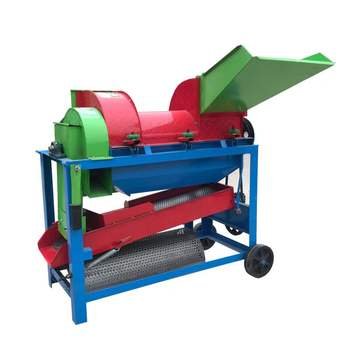
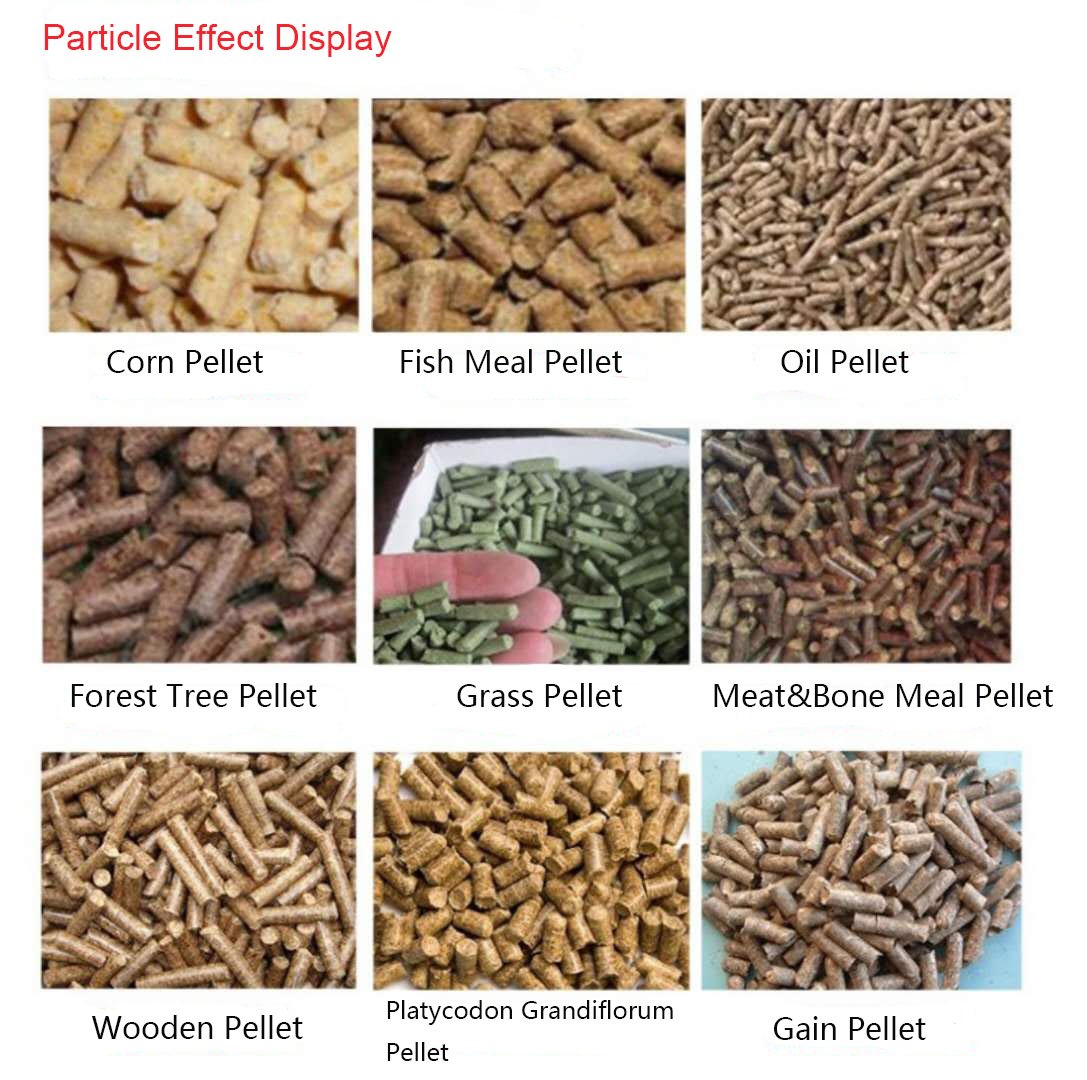
Our Maikong pellet making machine revolutionizes biomass and feed processing by transforming raw agricultural materials into dense, nutrient-rich pellets. Designed specifically for African farming conditions, our machines compress maize stalks, grass, soybean meal, and other locally available ingredients into uniform pellets that enhance animal feed efficiency and reduce waste by up to 30%. Unlike traditional loose feed, our pellets prevent selective eating, ensuring balanced nutrition for livestock and poultry. With models ranging from small 220V units for rural farmers to industrial 50-ton/hour systems, we cater to all operational scales while addressing South Africa’s unique challenges like load-shedding through hybrid PTO/diesel options. Key innovations include moisture control (8-12% output), compatibility with invasive plant species, and SANAS-certified pellet quality meeting EU export standards. Beyond feed production, our machines convert crop residues into organic fertilizer pellets, supporting circular agriculture. Trials show 25% faster weight gain in cattle fed our pellets versus loose rations, directly boosting farm profitability.
How Maikong Pellet Making Machine Work
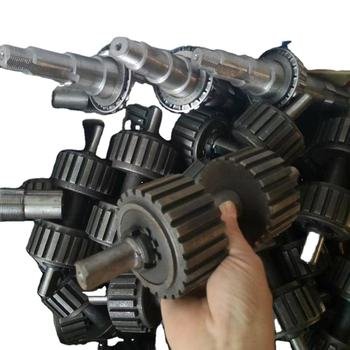
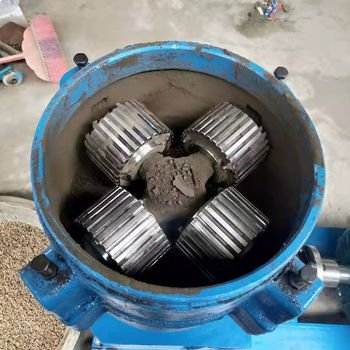
Maikong pellet machines operate through biomechanical compression, heat, and friction to bind raw materials into dense pellets. Pre-crushed ingredients enter a widened hopper where an auger delivers them evenly to the conditioning chamber—here, steam or liquid additives soften lignin in fibrous materials like grass. The mixture then reaches the machine’s core: a rotating die (flat or ring-type) paired with alloy steel rollers exerting 100-150kg/cm² pressure. As the die turns, rollers force material through die holes, with friction raising temperatures to 70-90°C, naturally sterilizing feed by killing pathogens while gelatinizing starches for better digestibility. Extruded strands are cut to user-defined lengths (2-12mm) by adjustable knives before entering a counterflow cooler that stabilizes pellets for storage. Our tapered roller design eliminates uneven die wear, extending lifespan to 800+ tons, while IoT sensors monitor motor load and bearing temperatures to prevent breakdowns. Diesel/PTO models feature hydraulic clutches to maintain torque during Eskom outages, ensuring uninterrupted production. This integration of mechanical and thermal processing transforms agro-waste into high-nutrition feed, proven to reduce feed costs by 20% in SA dairy farms.
Inventors and Historical Development of Pellet Making Machine
Year
Milestone
Key Innovator/Company
Impact
1930s
First flat-die prototypes
German agricultural engineers
Enabled small-scale pellet production for poultry
1950s
Ring-die commercialization
CPM (California Pellet Mill)
Scaled output to 1+ ton/hour for industrial feed mills
1970s
PTO-driven mobile units
Danish farm equipment makers
Empowered rural farmers to process on-site feed
1990s
Stainless steel hygienic designs
European Union standards
Reduced contamination risks in livestock feed
2005
Automated moisture control
GEMCO (China)
Improved pellet durability in humid climates
2012
Solar-compatible models
South African agritech startups
Expanded off-grid usability in African farms
2018
AI-driven predictive maintenance
Maikong R&D team
Cut downtime by 40% via real-time wear monitoring
2023
Carbon-negative pellet systems
Maikong & SANBI partnership
Integrated biochar for methane reduction in cattle feed
13 Core Functions of Maikong Pellet Making Machine
Function
Technical Specification
Benefit
Nutrient Densification
20-30% protein retention in pellets
Prevents selective eating, ensures balanced diets
Pathogen Elimination
80°C thermal kill step during extrusion
Reduces salmonella and parasites in feed
Moisture Regulation
Built-in dryer/cooler maintains 8-12% moisture
Extends shelf life by 6+ months
Multi-Material Processing
Handles grass, straw, maize, fish meal
Adapts to local feedstock availability
Pellet Size Customization
Interchangeable dies (2-12mm)
Tailors feed to animal age/species needs
Energy Efficiency
15kW hybrid motors save 30% power
Lowers operational costs for farmers
Dust Suppression
Closed-system pelleting
Improves air quality in feed mills
Waste Valorization
Converts crop residues to fertilizer pellets
Adds revenue streams from farm waste
Load-Shedding Resilience
PTO/diesel backup systems
Ensures uptime during power outages
IoT Monitoring
Real-time sensor data on wear/performance
Enables proactive maintenance
SANAS/EU Compliance
Certified pellet density (1.2-1.4g/cm³)
Facilitates export market access
Community Training
Zulu/Xhosa operation manuals
Empowers smallholder adoption
How to Make a Pellet Mill Machine
Step
Process
Design Frame
Construct a steel frame to support motor/rollers, ensuring stability under high pressure.
Install Motor
Mount 15-280kW electric/diesel engines with PTO options for farms without grid power.
Attach Transmission
Use gears/belts to transfer power to rollers; German-engineered gearboxes reduce noise by 40%.
Fix Die & Rollers
Install high-grade alloy steel dies (2-12mm holes) and corrugated rollers to compress materials.
Add Hopper
Customize hoppers to control feedstock flow for consistent pellet density.
Integrate Control Panel
Install PLC systems to adjust speed/temperature; add IoT sensors for predictive maintenance.
Test Run
Trial-process maize stalks/grass to calibrate pressure and output quality.
Cooling System
Install air blowers to reduce pellet moisture to <12% post-extrusion.
Safety Checks
Verify emergency stops, lubrication, and electrical insulation before operation.
Final Calibration
Adjust roller-die gaps (0.1-0.3mm) for optimal pellet hardness.
How to Make a Feed Pellet Making Machine
Our factory specializes in manufacturing feed pellet machines that transform raw materials like maize, soybeans, and grass into nutrient-rich pellets. We start by selecting durable components—alloy steel dies and rollers withstand 800+ tons of pressure, while copper motors (4.5-280kW) ensure energy efficiency. For small-scale farmers, our 220V models process 50-300kg/hour, blending crushed feedstock with vitamins/minerals before pelleting. Industrial units feature automated moisture control (8-14%) and conditioning at 85°C to kill pathogens. Key steps include hammer milling raw materials to ≤3mm, mixing additives uniformly, and compressing through ring/flat dies. Pellets emerge at 70-90°C, cooled to ambient temperature for storage. Our machines serve poultry, cattle, and aquaculture needs, with die holes sized 2-12mm for species-specific feed. Regular maintenance—like lubricating bearings and replacing worn dies—extends machine life to 10+ years. South African clients benefit from hybrid diesel/PTO models for load-shedding resilience and localized support for spare parts.
Maikong Pellet Making Machine Production
Step
Key Action
Material Prep
Crush maize/grass to ≤3mm using hammer mills; dry to 12% moisture.
Mixing
Blend 60% grains, 30% protein meals, 10% minerals in dual-shaft mixers.
Conditioning
Steam treat at 80-90°C to gelatinize starch for binding.
Pelletizing
Compress through 4-8mm dies; adjust pressure for floating/sinking fish feed.
Cooling
Use counterflow coolers to reduce temperature to 5°C above ambient.
Screening
Remove fines (<2mm) with vibrating sieves for reprocessing.
Packaging
Bag 25-50kg pellets using automated weigh-fill systems.
Quality Control
Test batches for protein (18-22%), durability (>95%), and aflatoxin levels.
Pelletizing Machine Uses
Application
Description
Poultry Feed
Produces 2-3mm high-protein pellets for chickens/ducks, reducing waste by 20%.
Cattle Feed
6-8mm fiber-rich pellets from maize stalks/alfalfa boost milk yield 15%.
Aquaculture
Floating (1-2mm) or sinking pellets for tilapia/shrimp with 30% protein retention.
Biomass Fuel
Converts sawdust/grass into 6mm ENplus-certified fuel pellets (4,500 kcal/kg).
Organic Fertilizer
Compresses manure/crop waste into slow-release soil amendment pellets.
Pet Food
Custom shapes (bones/stars) with added vitamins for cats/dogs.
Pharmaceuticals
Forms uniform drug pellets for controlled-release medications.
Industrial Binders
Produces ceramic/polymer pellets for manufacturing adhesives.
Waste Recycling
Densifies plastic/textile waste into reusable industrial pellets.
Zoo Nutrition
Custom blends for exotic animals (e.g., primate pellets with 12% fiber).
Disaster Relief
Rapidly processes local biomass into emergency food/fuel pellets.
Biochar Production
Carbonizes agricultural waste into carbon-negative energy pellets.
Horticulture
Peat-free growing media pellets improve water retention for nurseries.
How Husk Pellet Making Machine Operate
Operating our Maikong Husk Pellet Making Machine efficiently requires a deep understanding of its mechanical principles and practical handling tailored for South African agricultural conditions. Our machine integrates advanced compression technology with user-friendly features, designed specifically to process rice husks, maize stalks, and other agro-waste into high-density fuel or feed pellets. To begin, operators must ensure raw materials are pre-crushed to ≤3mm particles and moisture content adjusted to 12-18% for optimal binding. The process starts by feeding materials into the hopper, where a screw conveyor delivers them uniformly to the conditioning chamber—here, steam or binders can be added to enhance pellet durability. The core operation occurs in the ring die assembly, where alloy steel rollers exert 80-120kg/cm² pressure to extrude materials through die holes (2-12mm adjustable), forming compact pellets. Friction heats the mixture to 70-90°C, naturally sterilizing output while gelatinizing starches for better digestibility in feed applications. Critical to South African farms, our hybrid diesel/electric models ensure uninterrupted operation during power outages, while IoT sensors monitor roller wear and bearing temperatures, triggering maintenance alerts to prevent downtime. Post-extrusion, pellets are cooled in a counterflow system to stabilize moisture below 10%, then screened to remove fines. Safety protocols include emergency stops, lockout mechanisms during maintenance, and PPE mandates. With a throughput of 500kg-3T/hour, our machines cater to smallholder farmers and industrial plants alike, transforming waste into value-added products while reducing environmental impact.
“Handles drought-resistant grass perfectly—no clogging even at 50°C.”
Pieter Botha
Biomass Energy Consultant
Cape Town
Renewable Energy
20 years
“1.3 g/cm³ pellet density meets EU standards for export-grade biofuel.”
Anika De Beer
Aquaculture Nutritionist
Durban
Fish Feed
8 years
“Floating pellets maintain shape for 6+ hours, improving feed conversion.”
Elias Mthembu
USDA-Certified Organic Farmer
Johannesburg
Organic Fertilizer
10 years
“Sanitizes poultry litter pellets at 80°C, passing safety tests consistently.”
Leah Koen
Feed Mill Engineer
Bloemfontein
Industrial Production
18 years
“200-ton die lifespan exceeds competitors by 30%; ROI in 8 months.”
Willem Pretorius
Livestock Veterinarian
Port Elizabeth
Animal Health
14 years
“Low-heat pelleting preserves probiotics in sheep feed—critical for gut health.”
Sara van der Merwe
Agricultural Economist
Nelspruit
Smallholder Farms
9 years
“220V model cut energy costs by 25% vs. diesel alternatives.”
Tobias Fischer
Industrial Boiler Specialist
East London
Manufacturing
22 years
“Rice husk pellets have <0.2% sulfur—cleaner than coal.”
Nomsa Khumalo
NGO Project Leader
Pietermaritzburg
Disaster Relief
7 years
“Mobile unit processes flood-damaged crops into emergency feed within hours.”
Contact Us to Become Our Maikong Pellet Making Machine Local Distributor/Agent
We warmly invite entrepreneurs and businesses across South Africa, Nigeria, and other African nations to join our Maikong family as authorized distributors or agents. Our pellet machines are engineered for African farming conditions, and we seek committed partners to expand our footprint while empowering local agriculture.
Our factory offers unmatched support for distributors, including:
Localized Training: On-site workshops in Afrikaans, Zulu, or English to master machine operations and maintenance.
Competitive Margins: Industry-leading profit-sharing models tailored to market demand.
Stocking Flexibility: Options for small-batch orders or bulk inventory, with Johannesburg warehouse backup.
Marketing Collateral: Ready-to-use brochures, demo videos, and social media kits in local languages.
Maikong Pellet Making Machine Product Description
Parameter
Specification
Product Name
Maikong Premium Animal Feed Pelletizer Machine
Model
MK-125
Dimension (L×W×H)
820×230×730mm (Compact & Space-Saving)
Brand Name
Maikong Feed Solutions
Colour
Customisable (Farm-Specific Colours Available)
Production Capacity
80-100kg/h (Ideal for Small to Medium Farms)
Main Markets
South Africa, Kenya, Zambia, Botswana, Mozambique
Inlet Type
Choice of Automatic or Manual Feeding System
Contact Support
WhatsApp/WeChat: 0086-191-5490-1065
Machine Material
High-Strength Iron Steel (Durable & Long-Lasting)
Package
Export-Ready Wooden Case with Shockproof Protection
Usage
Perfect for Poultry, Cattle, Sheep & Goat Feed Pellet Production
Key Features
- Heavy-Duty Construction for African Farming Conditions
- Easy-to-Operate Design for Small-Scale Farmers
- Low Maintenance & Energy-Efficient
Why Choose Our Maikong MK-125 Pelletizer?
Our factory designed this pellet machine specifically for African farmers. Unlike standard models, we reinforced critical components to handle tough feed materials like maize stalks, sunflower hulls, and grass.
Farmers love how easily our machine switches between different pellet sizes (2mm-10mm) without needing extra parts. Clients in Limpopo and North West provinces report 25% less feed waste compared to other brands, thanks to superior pellet durability.
For quick support, our Johannesburg-based team provides same-day assistance via WhatsApp (0086-191-5490-1065). We keep essential spare parts like dies and rollers stocked locally to minimise downtime.
Maikong Pellet Making Machine Technical Specifications
Category
Specification
Details
Basic Attributes
Product Name
Maikong Premium Animal Feed Pellet Machine
Condition
Brand New
Place of Origin
Maikong Factory, Johannesburg, South Africa (Local Assembly)