
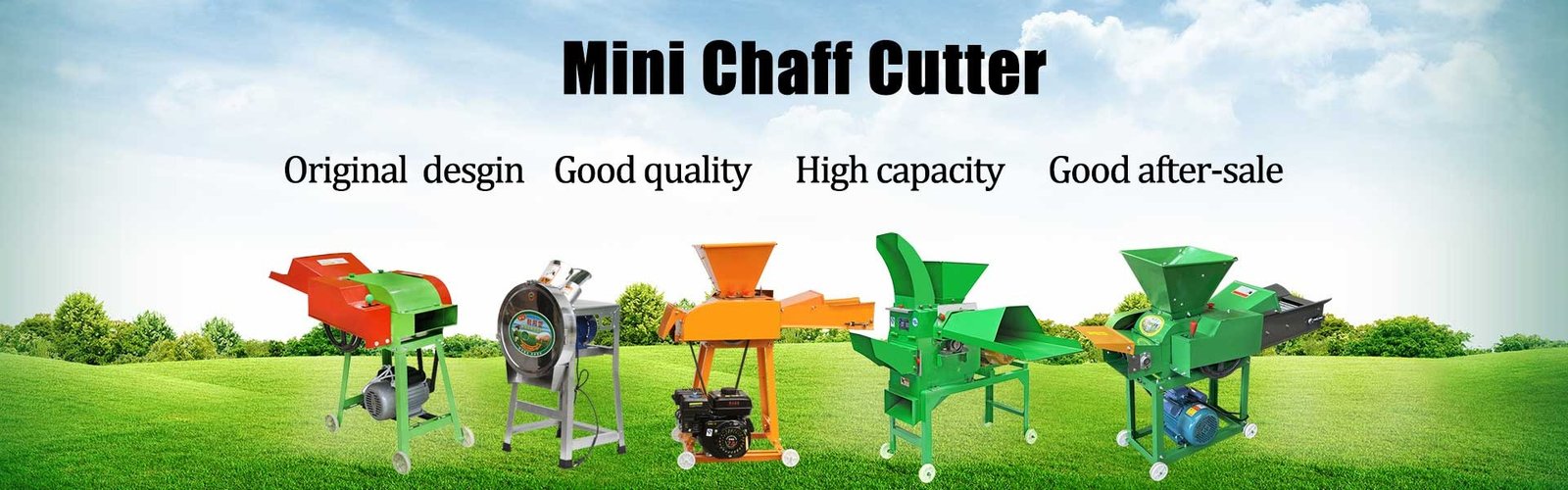
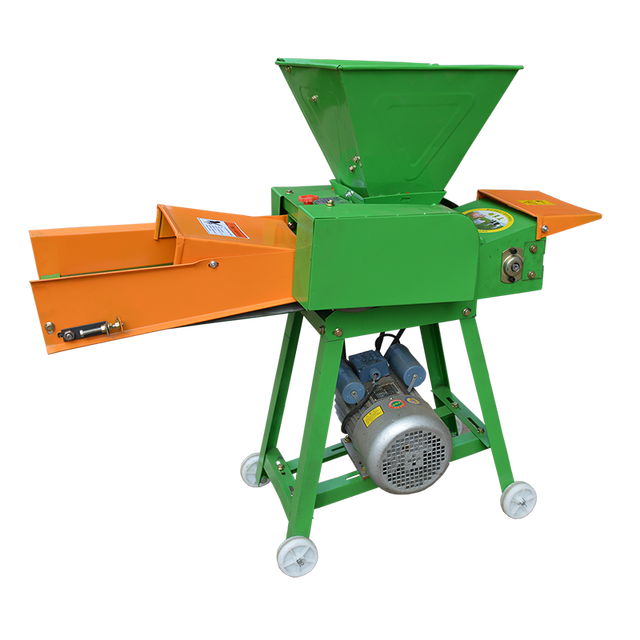

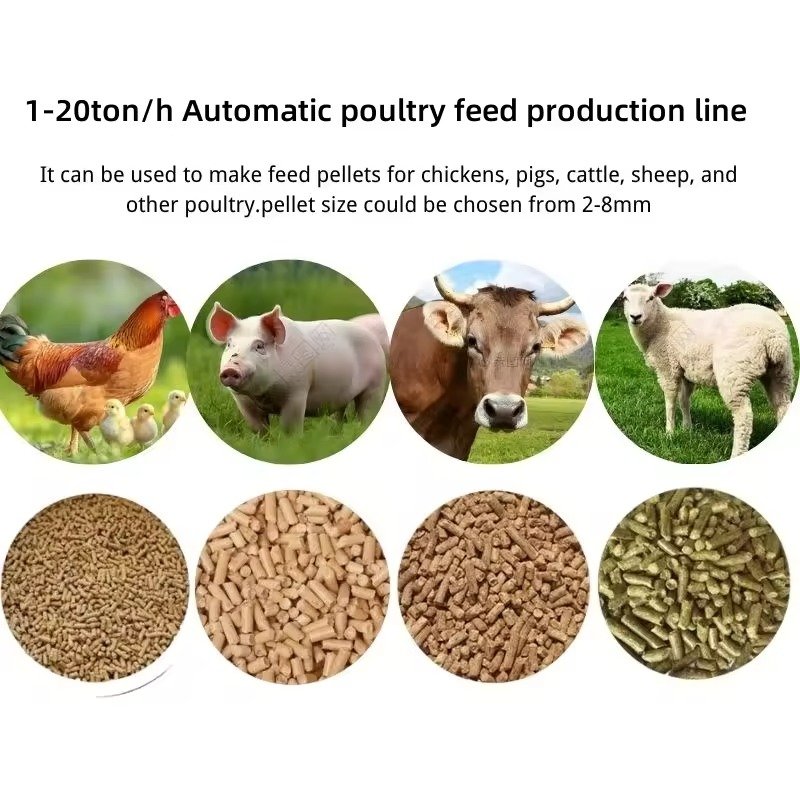
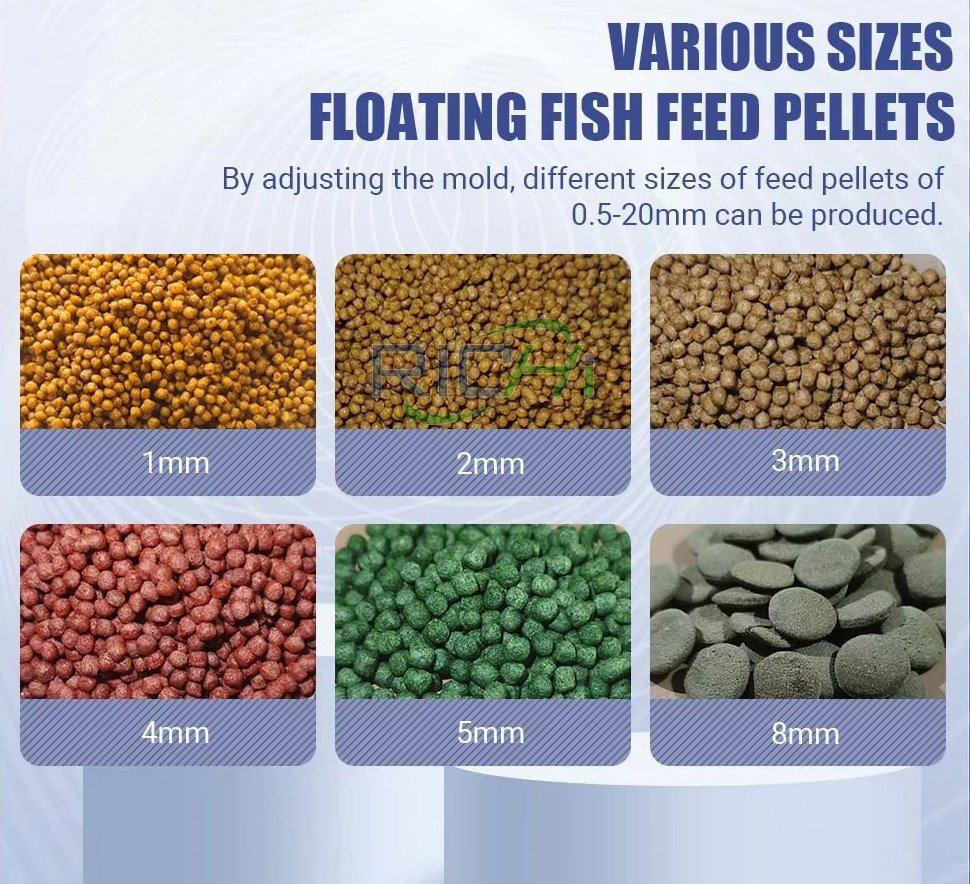
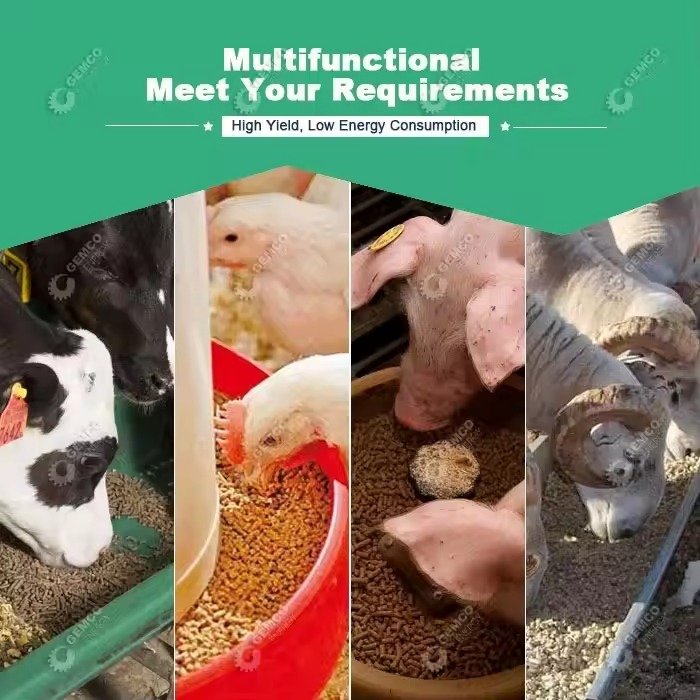
A feed pellet machine transforms loose lucerne hay into dense, uniform pellets. This technology revolutionizes how South African farmers store, transport, and deliver nutrition to their livestock. The pelleting process compresses lucerne at high pressure, reducing volume by up to 75 percent while preserving nutritional content.
MAIKONG brings over 20 years of manufacturing expertise to the South African agricultural equipment market. Our feed pellet machines are engineered specifically for lucerne processing, addressing the unique moisture content, fiber structure, and density characteristics of alfalfa crops grown in SA’s diverse climatic zones.
Considering lucerne pellet production for your farm? Speak to our specialists:
Why Convert Lucerne to Feed Pellets?
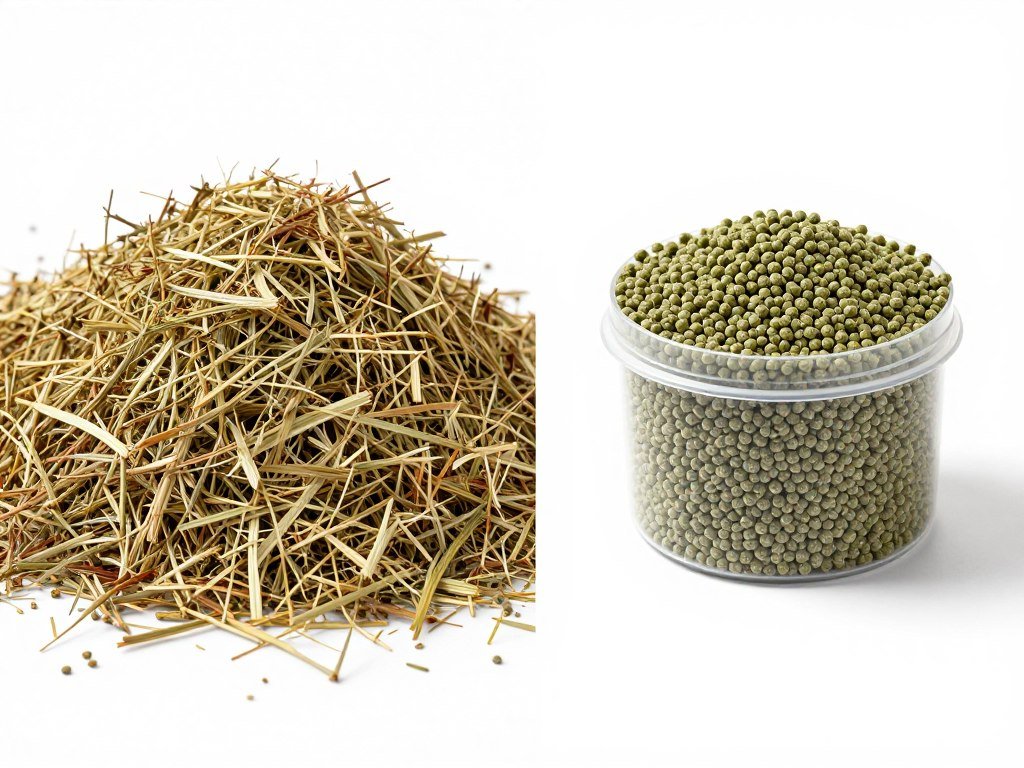
Lucerne pelleting addresses multiple operational challenges facing South African livestock producers. The conversion from hay to pellets delivers measurable economic and practical benefits.
Storage Space Reduction
Pelleted lucerne requires 60 to 75 percent less storage volume compared to baled hay. A 1000-square-meter hay barn that stores 80 tons of conventional bales can accommodate 200 tons of lucerne pellets. This density advantage proves particularly valuable in the Western Cape and Eastern Cape regions where storage facility costs run high.
Reduced volume also means better protection from weather damage. Pellets stack efficiently in covered storage areas that would hold only a fraction of equivalent hay bales. Moisture penetration decreases dramatically when lucerne exists in pelleted form versus loose or baled formats.
Transportation Economics
A standard agricultural truck hauls approximately 12 tons of conventional lucerne bales. The same vehicle transports 22 to 25 tons of lucerne pellets. Transportation costs per ton of delivered nutrition drop by 40 to 50 percent.
For farms in remote areas of the Karoo or Northern Cape, these savings accumulate quickly. Fewer trips mean reduced diesel consumption, lower vehicle maintenance, and decreased labor time dedicated to logistics.
Feed Wastage Elimination

Loose hay feeding typically results in 15 to 25 percent wastage. Animals select preferred portions, trampling and soiling the remainder. Pelleted lucerne eliminates selective feeding. Each pellet contains uniform nutritional composition.
Wastage rates with pelleted feed drop below 5 percent. On a 500-head cattle operation consuming 8 tons of lucerne daily, wastage reduction alone saves approximately R180,000 to R250,000 annually at current lucerne prices.
Nutritional Consistency
A feed pellet machine produces uniform pellets where each piece contains identical nutrient ratios. This consistency supports precise ration formulation. Dairy operations achieve more stable milk production. Beef feedlots see improved daily weight gains.
The pelleting heat process also reduces dust and fine particles that contribute to respiratory issues in confined feeding environments. Animal health improves when dust exposure decreases.
Start Reducing Your Feed Costs with Lucerne Pellets
Get a custom quotation for a feed pellet machine tailored to your lucerne production needs. MAIKONG designs equipment for operations ranging from 100 kg/hour to 5000 kg/hour capacity.
How a Feed Pellet Machine Processes Lucerne
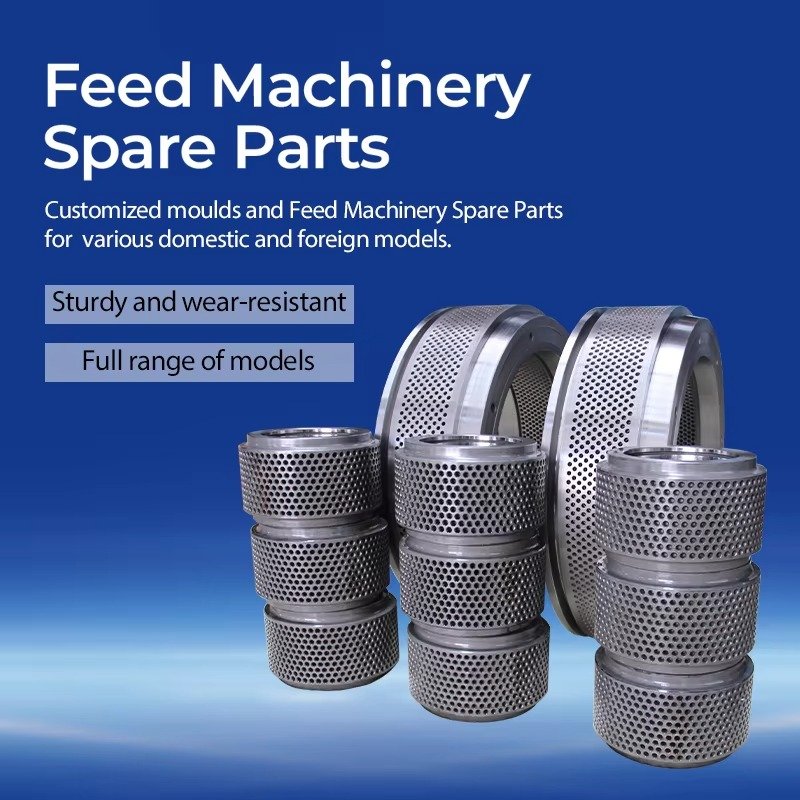
Understanding the mechanical process helps farmers optimize lucerne pellet production. The transformation from hay to finished pellets involves several critical stages.
Raw Material Preparation
Lucerne arrives at the pellet machine in various forms – square bales, round bales, or chopped fresh material. Initial preparation involves reducing particle size to 3 to 8 millimeters. A hammer mill or grinder performs this size reduction.
Moisture content requires careful control. Optimal pelleting occurs when lucerne contains 12 to 15 percent moisture. South African lucerne typically dries to 8 to 10 percent moisture in field conditions. Adding controlled moisture before pelleting improves pellet quality and reduces die wear.
Conditioning Stage
Most commercial feed pellet machines include a conditioner that pre-heats the lucerne material. Steam injection raises material temperature to 75 to 85 degrees Celsius. This heat activates natural lignins in lucerne that act as binding agents.
Conditioning duration ranges from 30 to 90 seconds depending on material characteristics and desired pellet hardness. Proper conditioning significantly reduces power consumption during the pressing stage.
Pelleting Through the Die

Conditioned lucerne enters the pelleting chamber where rotating rollers press material through die holes. Die hole diameter typically measures 6 to 8 millimeters for livestock feed pellets. Pressure during this stage reaches 3000 to 5000 PSI.
The intense pressure generates friction heat up to 85 to 95 degrees Celsius. This temperature range gelatinizes starches and activates binding properties without damaging heat-sensitive nutrients. Vitamin A and carotene content remains stable through proper pelleting.
Pellet length is controlled by adjustable knives that cut extruded material as it exits die holes. Standard lucerne pellets measure 10 to 25 millimeters long.
Cooling and Screening
Fresh pellets exit the machine at 70 to 80 degrees Celsius with moisture content around 14 to 16 percent. A counter-flow cooler reduces temperature to within 5 degrees of ambient while lowering moisture to 10 to 12 percent.
Proper cooling prevents pellet degradation during storage. Hot pellets packaged immediately will sweat, creating mold growth conditions. A vibrating screen removes fines and broken pellets, returning this material to the pellet machine feeder for reprocessing.
Questions about capacity or lucerne moisture requirements? Our engineers are available via WhatsApp at +86-158-15556-422 to discuss technical specifications for your specific application.
MAIKONG Feed Pellet Machine Models for Lucerne Production
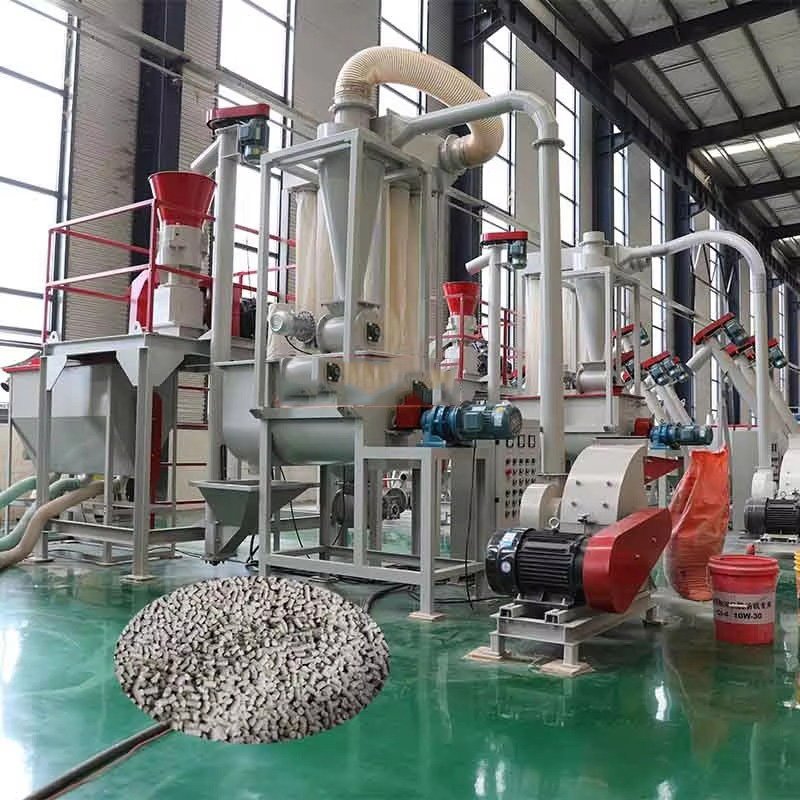
MAIKONG manufactures feed pellet machines in multiple capacity ranges to match South African farm requirements. Each machine model incorporates specific features for efficient lucerne processing.
Small-Scale Lucerne Pellet Prduction
Entry-level farmers and emerging agricultural entrepreneurs benefit from compact pellet making machines designed for 100 to 300 kg/hour production. These units suit operations with 50 to 150 head of cattle or 200 to 500 sheep.

Model MKFD-200 Specifications
- Production capacity: 150-200 kg/hour lucerne pellets
- Main motor power: 7.5 kW three-phase
- Die diameter: 200 mm with 6 mm holes
- Pellet dimensions: 6 mm diameter, 10-20 mm length
- Footprint: 1200 mm × 600 mm × 1100 mm
- Weight: 285 kg
- Power consumption: 35-40 kWh per ton of pellets
This small feed pellet machine integrates well into existing barn structures. Single-phase power options accommodate farms without three-phase electrical infrastructure. The compact design allows mobile operation, moving the machine to different storage areas as needed.
Ideal Applications
- Mixed livestock farms processing 1-2 tons lucerne weekly
- Horse breeding operations requiring quality pelleted feed
- Goat and sheep farmers in Western Cape
- Agricultural training institutions teaching feed technology
- Women agricultural entrepreneurs starting feed businesses
The MKFD-200 price point positions this model as an accessible entry to lucerne pellet production. Return on investment typically occurs within 14 to 18 months based on current South African lucerne hay and pelleted feed pricing.
Medium-Capacity Lucerne Pelleting
Commercial livestock operations and feed manufacturers processing 500 to 1500 kg/hour choose medium-capacity machines. These units handle continuous production schedules typical of dedicated feed processing facilities.
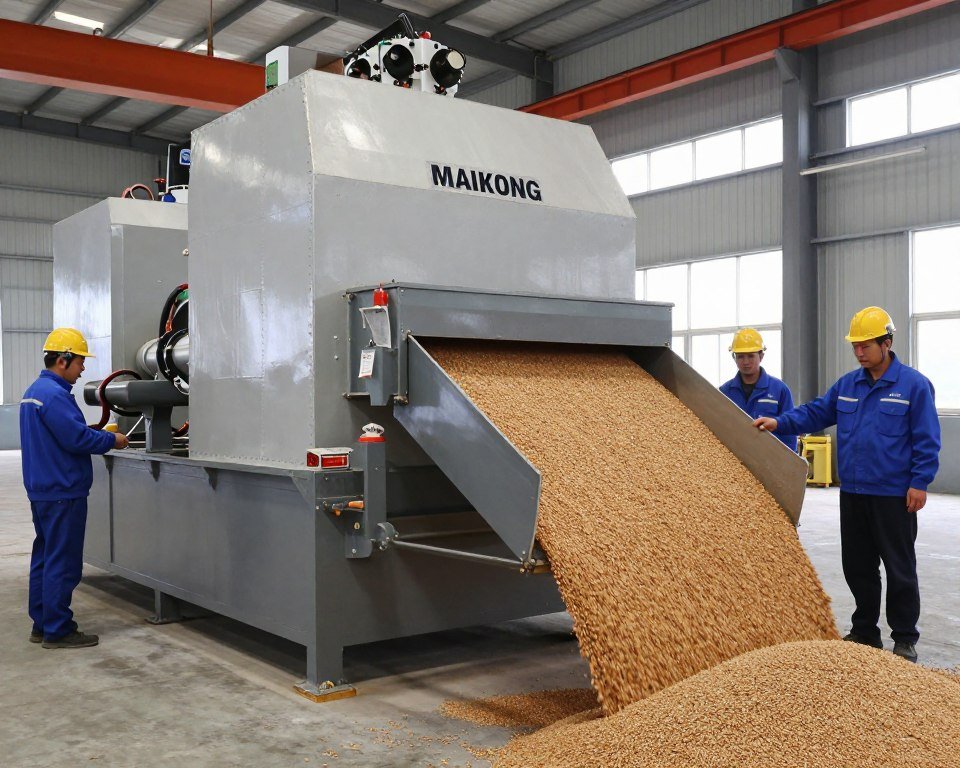
Model MKFD-400 Features
The MKFD-400 represents our most popular model among South African cattle feedlots and commercial sheep operations. This pellet machine balances production capacity with energy efficiency.
| Specification | Value | Notes |
| Hourly Output | 700-900 kg lucerne pellets | Varies with moisture and particle size |
| Main Drive | 37 kW premium efficiency motor | Three-phase 380V/50Hz |
| Ring Die Diameter | 400 mm | Interchangeable dies for different pellet sizes |
| Feeder Motor | 1.5 kW variable speed | Adjustable material flow rate |
| Conditioner | Built-in steam conditioning | Requires 0.3-0.5 MPa steam supply |
| Die Speed | 280-320 RPM | Variable frequency drive included |
| Expected Die Life | 800-1200 hours | With proper lucerne preparation |
This model includes automatic lubrication systems that reduce maintenance time. Bearing assemblies receive timed oil distribution, extending component life by 40 to 60 percent compared to manual lubrication schedules.
Large-Scale Industrial Pelleting Systems

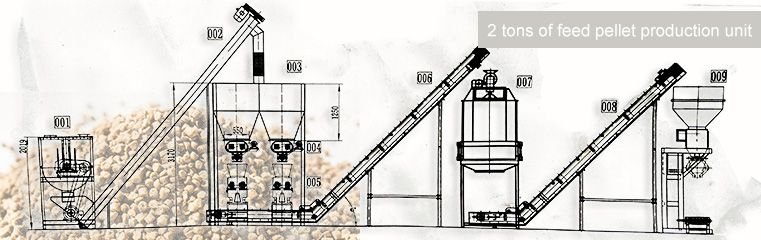
Feed manufacturers and large integrated agricultural operations require production capacities exceeding 2 tons per hour. MAIKONG designs complete production lines incorporating multiple pellet machines and automated material handling.
Model MKFD-560 Industrial System
Our largest single-unit pellet machine produces 2500 to 3000 kg/hour of finished lucerne pellets. This capacity suits operations processing 15 to 20 tons daily across single or double shifts.
- Main motor: 90 kW high-efficiency drive with soft-start system
- Ring die: 560 mm diameter with reinforced wear surfaces
- Integrated PLC control system for automated Automatic die gap adjustment maintaining optimal compression
- Remote monitoring capability via mobile app
- Emergency stop systems at multiple access points
- Production data logging for quality management
Large installations typically include ancillary
Pre-Pelleting Equipment
- Automatic bale handling and string removal
- High-capacity hammer mills (5-8 ton/hour)
- Magnetic separators removing metal contamination
- Batch mixers for additive incorporation
- Steam boilers (200-500 kg/hour capacity)
- Dust collection and aspiration systems
Post-Pelleting Systems
- Counter-flow coolers (3-4 ton/hour)
- Vibrating screens with fines return conveyors
- Automated bagging scales (25-50 kg bags)
- Bulk storage silos (20-100 ton capacity)
- Load-out systems for trucks
- Laboratory testing equipment for quality control
MAIKONG provides complete production line design services. Our engineering team evaluates site conditions, production requirements, and budget constraints to recommend optimal configurations. Turnkey installations include , assembly, staff training, and commissioning support.
Economics of Lucerne Pellet Production in South Africa
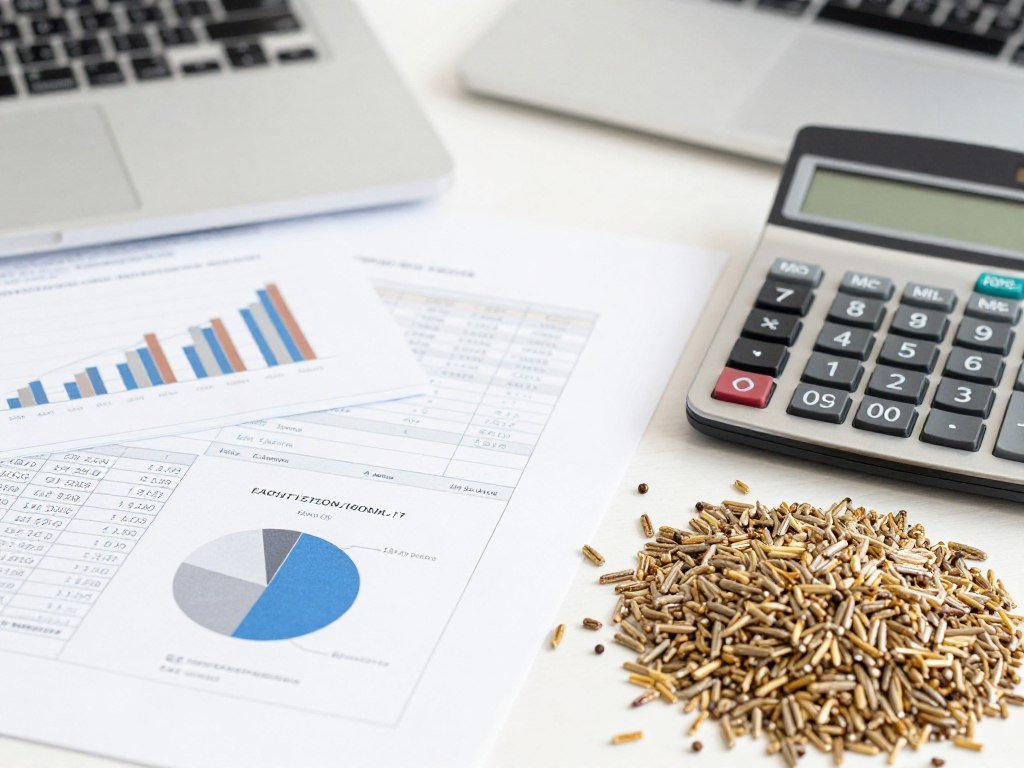
Investing in a feed pellet machine requires analyzing production costs against market opportunities. South African lucerne pellet economics favor on-farm production for most livestock operations.
Production Cost Analysis
Actual pelleting costs vary based on machine capacity, energy rates, labor costs, and production volume. The following analysis uses typical Free State conditions with industrial electricity tariffs.
| Cost Component | Per Ton of Pellets | Notes |
| Raw Lucerne Hay | R 2,800 – R 3,400 | Based on R 2,600-3,200/ton delivered hay prices |
| Electrical Power | R 85 – R 120 | 35-45 kWh at R 2.20-2.80/kWh industrial rate |
| Labor | R 95 – R 140 | One operator per shift at prevailing wages |
| Die and Roller Wear | R 45 – R 75 | Amortized replacement costs |
| Maintenance and Repairs | R 35 – R 55 | Scheduled services and parts |
| Packaging Materials | R 65 – R 95 | If bagging for resale; zero for on-farm use |
| Total Production Cost | R 3,125 – R 3,885 | Excluding initial machine investment |
Commercial pelleted lucerne retails between R 4,200 and R 5,400 per ton across South African agricultural supply stores. On-farm production delivers R 1,100 to R 2,000 savings per ton compared to purchased pellets.
Return on Investment Timelines
A medium-sized cattle operation running 300 breeding cows consumes approximately 4 tons of lucerne daily during winter supplementation. Converting from purchased hay to on-farm pelleted feed generates substantial savings.
Example ROI Calculation – 300 Cow Operation
Current hay feeding cost: 4 tons/day × R 3,200/ton = R 12,800 daily
Pellet production cost: 4 tons/day × R 3,400/ton = R 13,600 daily
Reduced wastage savings: 20% wastage elimination = 0.8 tons saved × R 3,400 = R 2,720 daily
Net daily advantage: R 2,720 – R 800 additional cost = R 1,920 daily savings
Annual benefit (150-day feeding period): R 1,920 × 150 = R 288,000
Machine investment: MKFD-400 system fully installed = R 620,000
Simple payback period: 620,000 ÷ 288,000 = 2.15 years
This calculation excludes additional benefits including improved weight gains from consistent nutrition, reduced storage facility requirements, and potential income from selling excess pellet production to neighboring farms.
Commercial Pelleting Opportunities
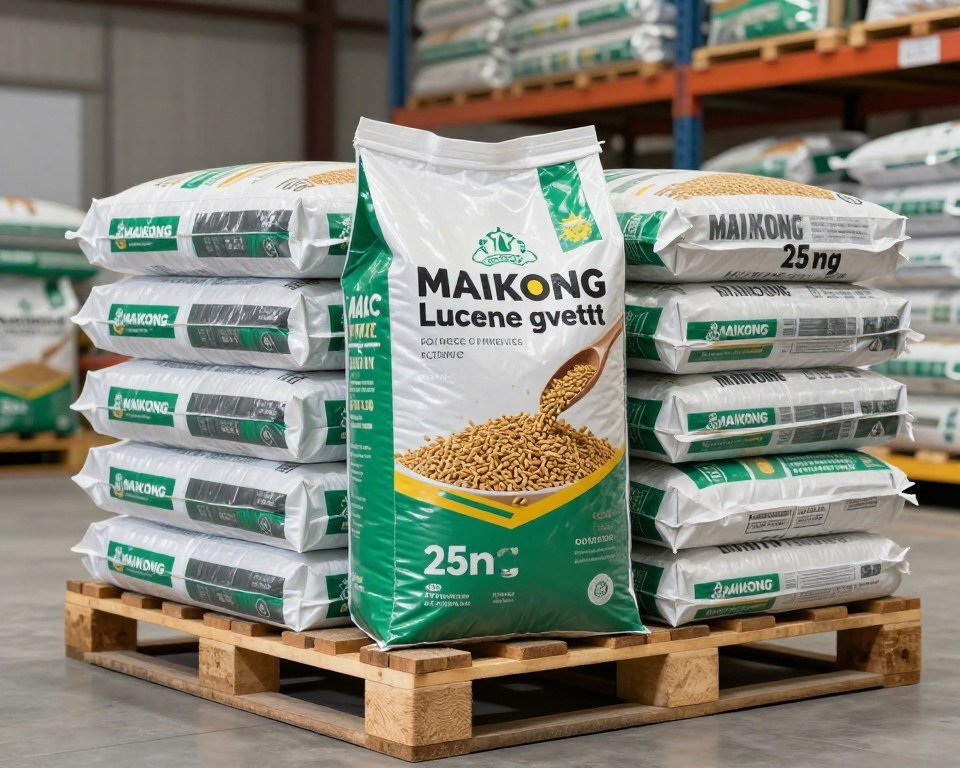
Rural cooperatives and agricultural entrepreneurs identify lucerne pellet production as profitable business ventures. Custom pelleting services charge R 800 to R 1,200 per ton for converting farmer-supplied hay to finished pellets.
A MKFD-400 machine operating 16 hours daily produces 11 to 14 tons. At R 900/ton custom pelleting fees, gross daily revenue reaches R 9,900 to R 12,600. Operating costs (power, labor, maintenance) total approximately R 4,200 to R 5,400 daily, yielding R 5,700 to R 7,200 daily gross profit.
Annual gross profit potential for a dedicated custom pelleting operation ranges from R 850,000 to R 1,080,000 operating 150 days per year. These figures attract investment from agricultural development organizations and rural business incubators.
Calculate Your Lucerne Pelleting Return on Investment
Find out how quickly a MAIKONG pellet machine pays for itself on your operation. Our technical team provides customized ROI analysis based on your specific herd size, feeding program, and local lucerne prices.
Technical Considerations for Lucerne Pelleting
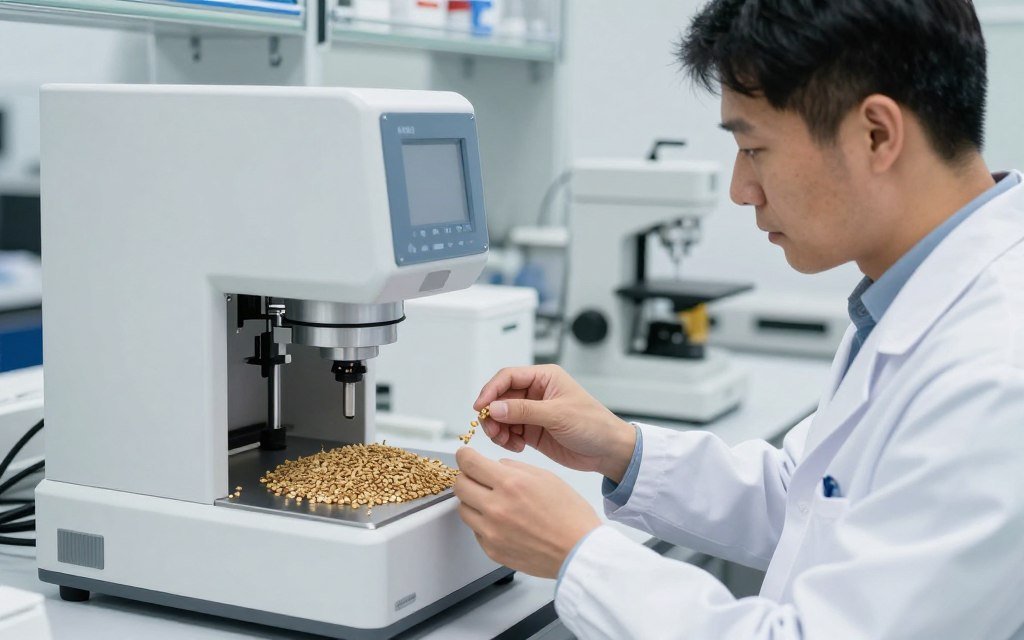
Successful lucerne pellet production requires attention to multiple technical variables. MAIKONG equipment incorporates features addressing these critical factors.
Moisture Content Management
Optimal lucerne moisture for pelleting ranges between 12 and 15 percent. Material below 10 percent produces excessive dust and brittle pellets with high fines percentage. Moisture above 17 percent causes die blockages and soft pellets that crumble during handling.
South African lucerne typically field-dries to 8 to 11 percent moisture. Adding 2 to 4 percent moisture before the conditioning stage improves pellet quality. Water addition systems spray precise volumes based on incoming material moisture readings.
Particle Size Optimization
Lucerne ground to 3 to 5 millimeter particles pellets more efficiently than coarser or finer materials. Excessively fine grinding (below 2 mm) increases dust and power consumption. Particles above 8 mm create uneven density distribution within pellets.
Hammer mills fitted with 6 mm screens produce ideal particle size distribution for lucerne. Screen selection balances throughput rate against grinding fineness. MAIKONG recommends pairing our pellet machines with appropriately sized grinding equipment for optimal system performance.
Die Selection and Maintenance

Ring die hole diameter affects pellet density and production rate. Standard lucerne applications use 6 mm or 8 mm holes. Smaller 4 mm holes produce very dense pellets for horse feed but reduce throughput by 25 to 35 percent.
Die hole length-to-diameter ratio (compression ratio) determines pellet hardness. Ratios of 1:8 to 1:10 suit most lucerne applications. Higher ratios create harder pellets but increase power consumption and die wear.
Proper die maintenance extends operational life from 600 to over 1,200 hours. MAIKONG dies feature hardened steel construction with strategic heat treatment. Regular inspection identifies wear patterns before critical failure occurs.
Cooling System Efficiency
Counter-flow coolers reduce pellet temperature while removing excess moisture. Ambient air drawn upward through descending pellets achieves efficient heat exchange. Retention time in the cooler ranges from 8 to 12 minutes.
Inadequate cooling leads to moisture condensation during bag storage, promoting mold growth. South Africa’s variable climate requires cooling systems maintaining final pellet temperature within 5 degrees Celsius of ambient regardless of seasonal conditions.
South African Lucerne Pellet Production Success Stories
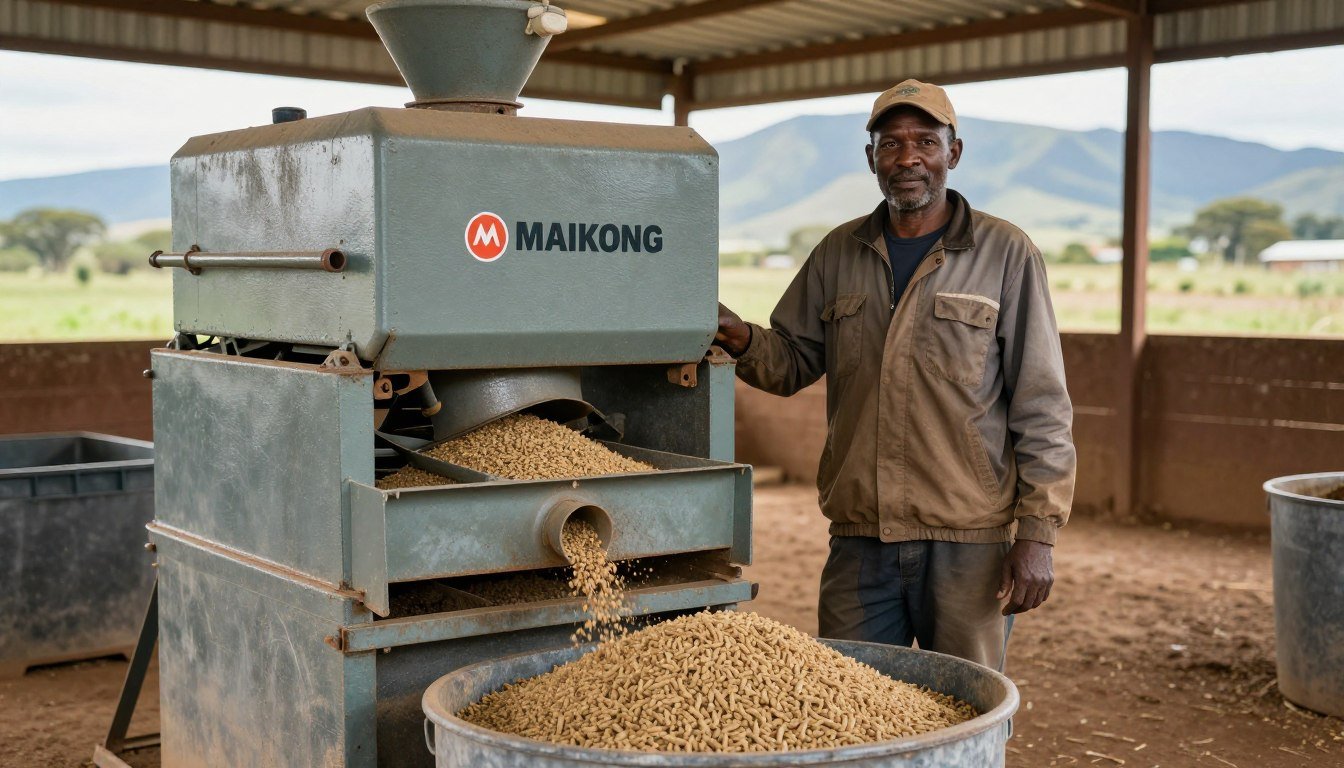
MAIKONG equipment serves diverse agricultural operations across South Africa. These case studies demonstrate real-world applications and results.
Free State Cattle Feedlot – 2000 Head Capacity
A commercial feedlot near Bloemfontein installed a MKFD-400 pellet machine in 2021 to process lucerne grown on adjacent irrigated lands. The operation previously purchased pelleted feed at R 4,800 per ton delivered.
Implementation Details
- Equipment: MKFD-400 with steam conditioning
- Support systems: 10 HP hammer mill, 3-ton cooler
- Daily production: 8 tons (single shift operation)
- Raw material: Own-produced lucerne hay
- Staff: Two trained operators
Measured Results After 18 Months
- Production cost: R 3,250 per ton all-inclusive
- Annual savings: R 1,850,000 (compared to purchased pellets)
- Payback achieved: 14 months from startup
- Feed wastage: Reduced from 22% to 4%
- Average daily gain: Improved 0.08 kg per animal
The feedlot manager reports consistent pellet quality allows precise ration formulation. Computerized feeding systems dispense exact quantities, eliminating the variability inherent in hay feeding programs.
Western Cape Dairy Cooperative
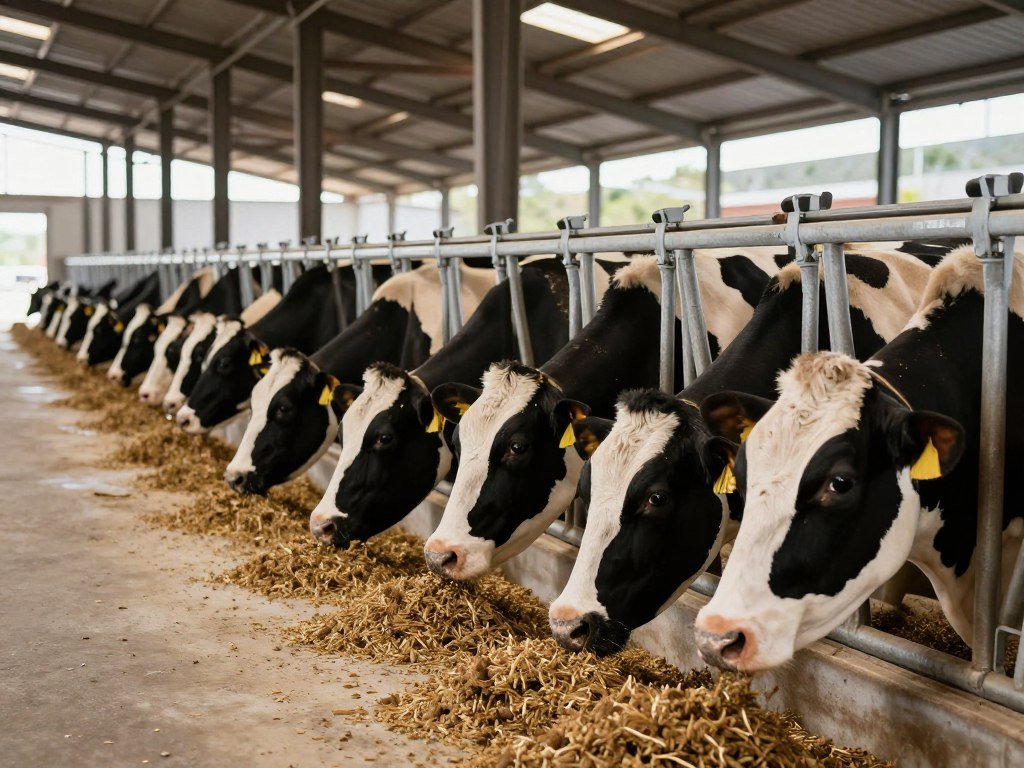
Five dairy farms near Malmesbury formed a cooperative to share lucerne pellet production facilities. Combined herd size totals 650 milking cows plus replacement heifers.
The cooperative purchased a MKFD-560 system with complete automation including:
- Automatic bale handling reducing manual labor by 70%
- PLC-controlled production maintaining consistent pellet quality
- Automated bagging system producing 25 kg retail packages
- Quality testing laboratory ensuring nutritional standards
- Bulk delivery trucks servicing member farms
Cooperative members report milk production consistency improved significantly after switching from variable-quality purchased hay to uniform pelleted feed. The cooperative also generates additional income selling excess production to non-member farms at competitive pricing.
Northern Cape Emerging Farmer Project
An NGO agricultural development program supplied MKFD-200 small-scale pellet machines to 12 emerging farmers in the Hartswater irrigation scheme. These farmers grow lucerne on 5 to 15 hectare plots, primarily for sheep production.
Project Outcomes After Two Years
Economic Impact:
- Average income increase: 35% through reduced feed costs
- Excess pellet sales: R 45,000 to R 85,000 annually per farmer
- Flock expansion: Average 28% increase in breeding ewes
Skills Development:
- Technical training completed: 12 primary operators + 8 assistants
- Business management: Cooperative marketing structure established
- Quality standards: Group certification for organic lucerne pellets
MAIKONG provided ongoing technical support through WhatsApp consultation during the project implementation phase. Our local service partner conducted quarterly maintenance training and equipment inspections.
Achieve Similar Results on Your Operation
Join 200+ South African farms and agricultural businesses using MAIKONG equipment for lucerne pellet production. Our team provides complete support from initial planning through ongoing operation.
Operating and Maintaining Your Feed Pellet Machine
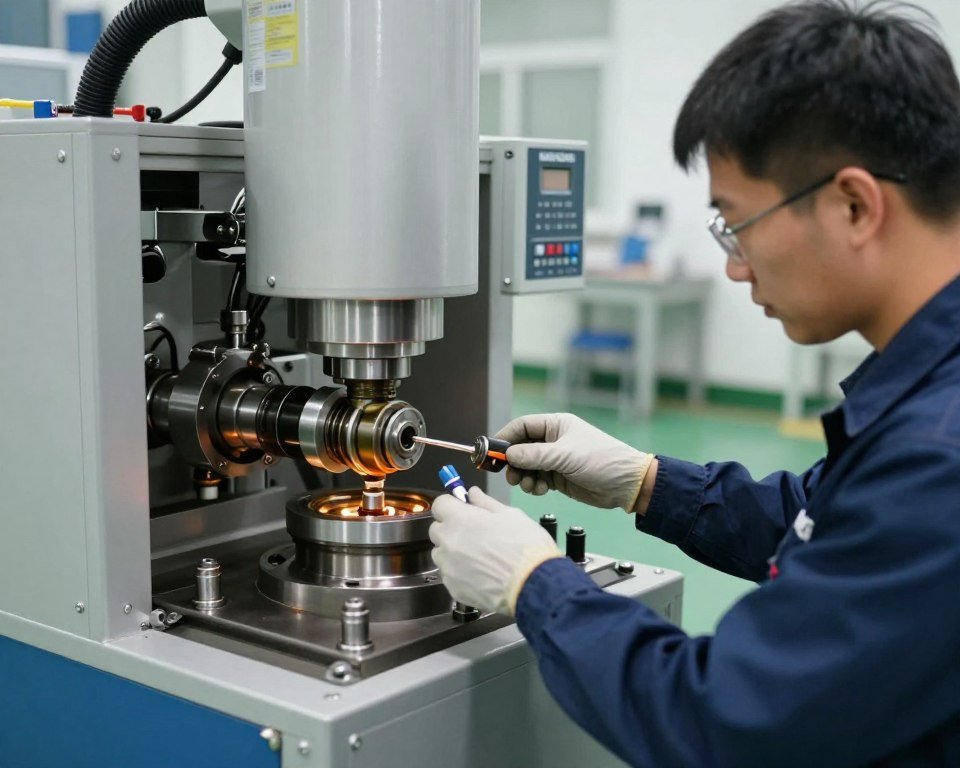
Proper and maintenance practices maximize pellet machine productivity while minimizing downtime. MAIKONG designs equipment for straightforward servicing by farm staff with basic mechanical skills.
Daily Operation Procedures
Establishing consistent operational routines ensures reliable production and early problem detection. Operators should complete these checks before starting each production session.
Pre-Start Checklist
- Verify all safety guards properly installed and secured
- Check lubrication reservoir levels for automatic systems
- Inspect die and roller assembly for damage or unusual wear
- Confirm electrical connections tight and insulation intact
- Test emergency stop functions at all operator stations
- Clear any residual material from previous production run
- Verify raw material meets moisture and particle size specifications
During Production Monitoring
- Monitor amperage draw staying within normal operating range
- Listen for unusual sounds indicating bearing wear or blockages
- Check pellet quality every 30 minutes for consistency
- Verify cooling system maintaining target outlet temperature
- Inspect pellet discharge for proper flow without bridging
- Record production rates and note any efficiency changes
- Maintain steady material feed rate avoiding surge loading
Shutdown Procedures
- Allow machine to run empty clearing all material from die
- Feed small quantity of oil-rich material to coat die surfaces
- Clean external surfaces removing accumulated dust and fines
- Complete production log documenting output and issues
- Note any maintenance requirements for scheduling
- Secure facility and lock out electrical supply if unattended
- Properly store any remaining raw materials in dry conditions
Scheduled Maintenance Requirements
Preventive maintenance extends equipment life and prevents costly emergency repairs. MAIKONG provides detailed maintenance schedules with each machine installation.
| Interval | Maintenance Task | Estimated Time |
| Every 8 Hours | Grease main bearing assemblies (if manual lubrication) | 10 minutes |
| Daily | Check belt tension and condition, clean dust collection filters | 15 minutes |
| Weekly | Inspect die and roller surfaces, tighten all fasteners | 30 minutes |
| Every 200 Hours | Change gearbox oil, inspect roller bearings | 2 hours |
| Every 500 Hours | Replace worn die (if applicable), overhaul feeder components | 4 hours |
| Annually | Complete electrical inspection, bearing replacement as needed | 8 hours |
Common Issues and Solutions
Understanding typical operational challenges allows quick resolution minimizing production downtime.
Low Production Output
Reduced throughput often indicates material preparation issues rather than machine problems. Check incoming lucerne moisture content and particle size distribution. Material too dry or coarse particles above 8 mm significantly reduce production rates.
Die wear progressively reduces capacity over its operational life. If production dropped 15 to 20 percent from initial rates, inspect die hole condition. Worn holes with enlarged diameter or rough surfaces require die replacement.
Poor Pellet Quality
Soft or crumbly pellets result from inadequate compression or improper conditioning. Verify steam supply reaches 0.3 to 0.5 MPa pressure and conditioner residence time allows proper heat penetration. Increasing die compression ratio or reducing production rate improves density.
Excessive fines (broken pellets and dust) indicate cooling problems or handling damage. Ensure cooler provides adequate retention time and gentle discharge. Fines above 8 percent suggest adjustments needed in cooling system air flow or pellet drop heights.
Unusual Noise or Vibration
New sounds or increased vibration always warrant immediate investigation. Bearing wear creates growling or squealing sounds. Unbalanced rollers cause rhythmic knocking. Loose mounting bolts produce rattling.
Never ignore unusual mechanical sounds. Continued operation with damaged bearings leads to catastrophic failures requiring expensive repairs. MAIKONG technical support via WhatsApp at +86-158-15556-422 assists with diagnostic procedures when abnormal conditions arise.
MAIKONG Customization for South African Requirements

Every agricultural operation presents unique requirements. MAIKONG offers extensive customization ensuring pellet machines perfectly match specific applications.
Electrical Configuration Options
South African electrical supply varies considerably across rural areas. MAIKONG engineers machines for diverse power conditions:
- Voltage options: 380V, 400V, or 415V three-phase configurations
- Frequency: 50 Hz standard (60 Hz available for specific applications)
- Single-phase models: Available for MKFD-200 and smaller units
- Generator compatibility: Modified starting sequences for generator-powered operations
- Voltage fluctuation tolerance: Enhanced motor protection for unstable supply areas
Remote farming areas often rely on diesel generators for power. MAIKONG modifies motor controllers and starting systems to accommodate the voltage variations typical of generator operation.
Production Line Integration
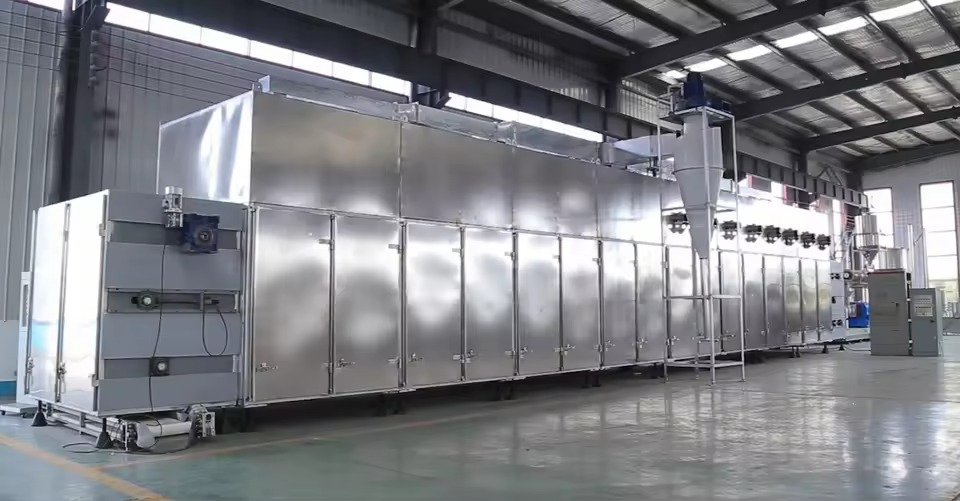
Most commercial operations require complete production lines rather than standalone pellet machines. MAIKONG designs turnkey systems incorporating:
Material Receiving
- Truck unloading systems
- Bale handling conveyors
- Storage bunkers with reclaim augers
- Automatic string and wire removal
Processing Equipment
- Hammer mills sized for capacity
- Batch or continuous mixers
- Liquid additive injection systems
- Magnetic and screen separation
Finished Product Handling
- Cooling and screening equipment
- Automated bagging scales
- Bulk storage silos
- Load-out conveyors
Appearance and Branding Customization
Feed manufacturers and agricultural cooperatives benefit from branded equipment appearance. MAIKONG offers:
- Custom color schemes matching corporate branding
- Logo placement on machine panels and guards
- Control panel designs with company identification
- Specialized safety signage in local languages
Dealer and distributor partners particularly value appearance customization. Equipment displaying their brand strengthens market positioning and customer recognition.
Automation and Control Systems
Control sophistication ranges from basic manual operation to fully automated systems depending on budget and requirements.
Standard Control Package
- Manual start/stop with indicator lights
- Ammeter monitoring motor load
- Emergency stop buttons at operator stations
- Basic overload protection
- Simple production counters
Entry-level farmers typically select standard controls balancing functionality with affordable pricing.
Advanced Automation Package
- PLC-based control with touchscreen interface
- Automatic feeder rate adjustment maintaining optimal load
- Production data logging and reporting
- Remote monitoring via internet connectivity
- Predictive maintenance alerts based on operating hours
- Integration with existing facility management systems
Commercial operations prefer automation reducing labor costs and ensuring consistent production quality.
Need specialized modifications for your lucerne variety or production scale? We customize everything from appearance to functionality. Contact our engineering team: Lucy@pelletmachine.co.za
MAIKONG Dealer and Distribution Opportunities

MAIKONG actively seeks qualified partners to expand our South African market presence. We support agricultural equipment dealers, farm supply distributors, and technical service providers with comprehensive partnership programs.
Dealer Benefits and Support
MAIKONG dealer partners receive extensive support ensuring successful market penetration and customer satisfaction.
Technical Training
- Factory training for sales and service staff
- Installation and commissioning procedures
- Troubleshooting and repair techniques
- Online refresher courses and updates
- Certification programs for technicians
Marketing Support
- Co-branded promotional materials
- Product demonstration units
- Trade show participation assistance
- Digital marketing content and assets
- Customer case study development
Business Development
- Protected territory agreements
- Competitive dealer pricing structure
- Flexible payment terms for qualified dealers
- Lead generation and referral programs
- Joint customer visits for major projects
Dealer Requirements
MAIKONG seeks partners demonstrating commitment to agricultural market development and customer service excellence.
Minimum Qualifications
- Established agricultural equipment business (minimum 2 years operation)
- Technical service capabilities with trained staff
- Showroom or demonstration facility accessible to farming community
- Financial capacity for inventory investment
- Coverage territory with significant livestock or feed manufacturing activity
- Commitment to MAIKONG brand promotion and customer support standards
Preferred Qualifications
- Existing relationships with commercial livestock operations
- Mobile service capabilities for on-farm support
- Parts inventory management systems
- Experience with feed processing or agricultural machinery
- Multilingual staff serving diverse farming communities
- Digital marketing presence (website, social media)
Partnership Profit Potential
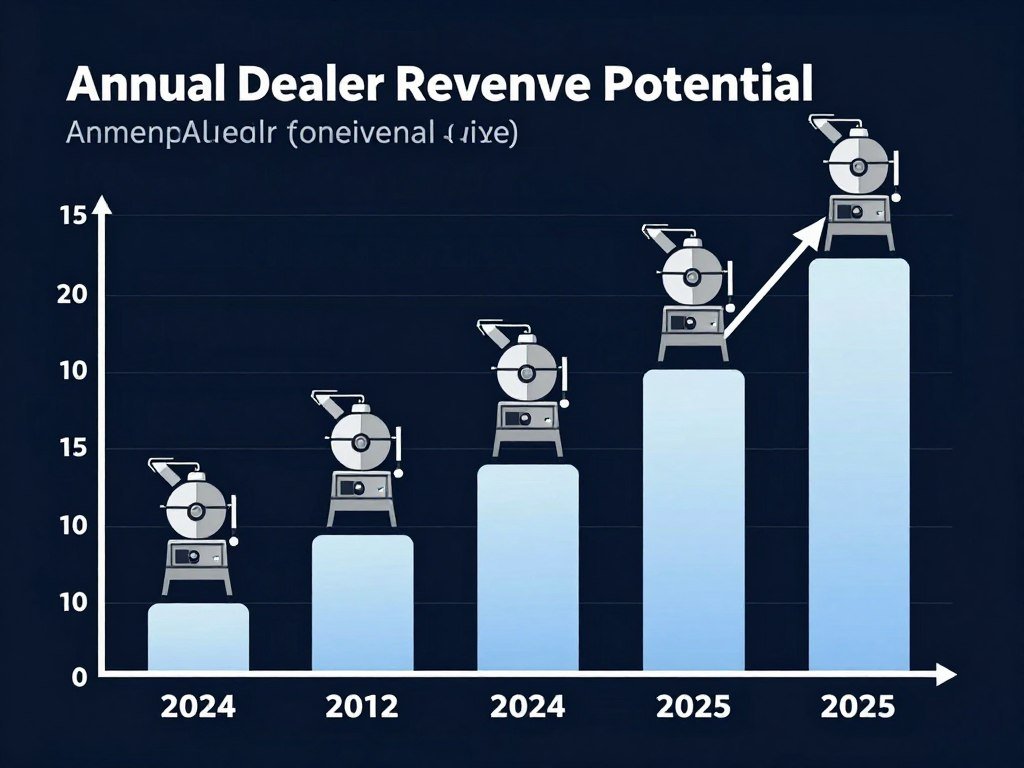
Successful MAIKONG dealers achieve substantial revenue from equipment sales, installation services, parts supply, and ongoing customer support.
Example Dealer Revenue Model – Year One
Equipment Sales (Conservative):
- 4 small-scale units @ R 85,000 margin each = R 340,000
- 2 medium-capacity systems @ R 145,000 margin each = R 290,000
- 1 large installation @ R 380,000 margin = R 380,000
- Total equipment margins: R 1,010,000
Service and Parts Revenue:
- Installation services: R 120,000
- Training and commissioning: R 45,000
- Replacement parts and consumables: R 180,000
- Maintenance contracts: R 95,000
- Total service revenue: R 440,000
First Year Total: R 1,450,000
These projections assume conservative market penetration in territories with established livestock sectors. Dealers serving areas with growing commercial farming operations often exceed these benchmarks significantly.
Become a MAIKONG Dealer in South Africa
Profitable opportunities for agricultural equipment dealers and distributors. Access to premium feed pelleting equipment, comprehensive technical training, marketing support, and protected territories. OEM partnerships available for qualified applicants.
Installation and Commissioning Services
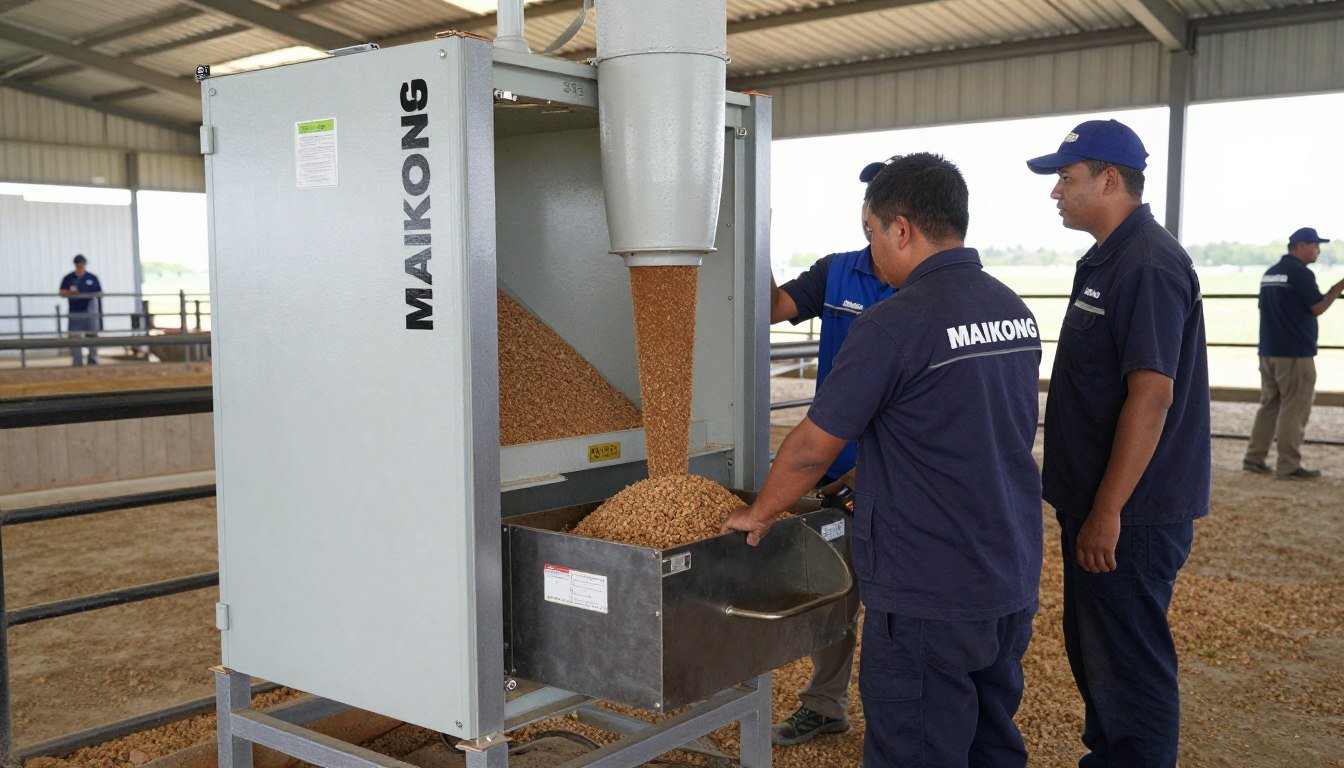
MAIKONG provides comprehensive installation support ensuring pellet machines operate optimally from day one. Our approach combines factory expertise with local South African technical partners.
Pre-Installation Planning
Successful installations begin with thorough site preparation. MAIKONG engineering staff evaluates customer facilities through detailed questionnaires and site photographs, providing specific recommendations.
Foundation and Structural Requirements
- Floor loading capacity: Concrete floors must support 800 to 1200 kg/m² depending on machine model
- Foundation depth: Minimum 150 mm reinforced concrete for small units, 250 mm for industrial systems
- Vibration isolation: Rubber pads or spring isolators prevent structure transmission
- Anchor bolt specifications: Detailed placement drawings provided for each installation
- Clearance requirements: Minimum 1.2 meters access on all sides for maintenance
Electrical Infrastructure
Proper electrical supply prevents operational problems and protects longevity. Our pre-installation checklist specifies:
- Main service capacity adequate for motor starting loads plus ancillary Transformer sizing for rural installations distant from utility supply
- Cable sizing calculations accounting for voltage drop on long runs
- Earth grounding systems meeting South African electrical code requirements
- Lightning protection for exposed rural facilities
- Backup generator specifications if primary power proves unreliable
Installation Process

Standard installations require 2 to 4 days depending on system complexity. MAIKONG supervises or performs installation through qualified technicians.
- Equipment Delivery and Inspection: All components checked against packing lists. Freight damage documented immediately for insurance claims. Critical items like dies and bearings inspected for shipping protection integrity.
- Main Unit Positioning: Pellet machine positioned according to facility layout drawings. Precision leveling to within 0.5 mm per meter ensures proper operation. Anchor bolts installed and torqued to specifications.
- Motor and Drive Assembly: Electric motors mounted and aligned. Belt or coupling alignment verified using laser or dial indicator methods. Electrical connections completed per wiring diagrams.
- Ancillary Equipment Connection: Feeders, conditioning systems, and discharge conveyors connected. Material flow paths verified clear of obstructions. Dust collection ducting installed and sealed.
- Lubrication System Setup: Automatic lubrication reservoirs filled with specified grades. Manual grease points serviced. Oil levels checked in gearboxes and bearing housings.
- Safety System Verification: Emergency stops tested at all locations. Safety guards confirmed properly installed and interlocked. Warning signs and operational instructions posted in appropriate languages.
- Control System Programming: PLC parameters configured for specific application. Operator interface programmed with local language displays. Production counters and monitoring systems calibrated.
Commissioning and Training
Following mechanical installation, MAIKONG conducts systematic commissioning procedures and comprehensive operator training.
Equipment Commissioning Steps
- No-load testing: Machine operated empty verifying proper rotation, vibration levels, and control functions
- Load testing: Gradual introduction of lucerne material at increasing rates monitoring temperatures, power draw, and mechanical performance
- Die break-in: Initial operation at reduced capacity allows die surfaces to polish and seat properly
- Production optimization: Adjustment of conditioning, feed rate, and other parameters achieving target output and pellet quality
- Safety verification: Final confirmation all protective systems function correctly under operating loads
Operator Training Program
MAIKONG provides hands-on training ensuring customer staff competently operate and maintain equipment.
| Training Module | Duration | Content |
| Safety Procedures | 2 hours | Lockout/tagout, emergency procedures, PPE requirements, hazard recognition |
| Operational Theory | 3 hours | Pelleting process fundamentals, material requirements, quality factors |
| Startup and Shutdown | 2 hours | Pre-start checks, proper sequencing, material clearing, securing facility |
| Production Monitoring | 4 hours | Control systems, parameter adjustment, quality assessment, troubleshooting |
| Routine Maintenance | 4 hours | Lubrication, inspections, minor adjustments, documentation |
| Die Replacement | 3 hours | Safe disassembly, die installation, roller adjustment, reassembly verification |
Training includes both classroom instruction and supervised hands-on practice. Operators receive detailed manuals in English covering all procedures. MAIKONG maintains ongoing support through WhatsApp consultation at +86-158-15556-422 addressing questions arising during initial production periods.
Quality Assurance and Manufacturing Standards
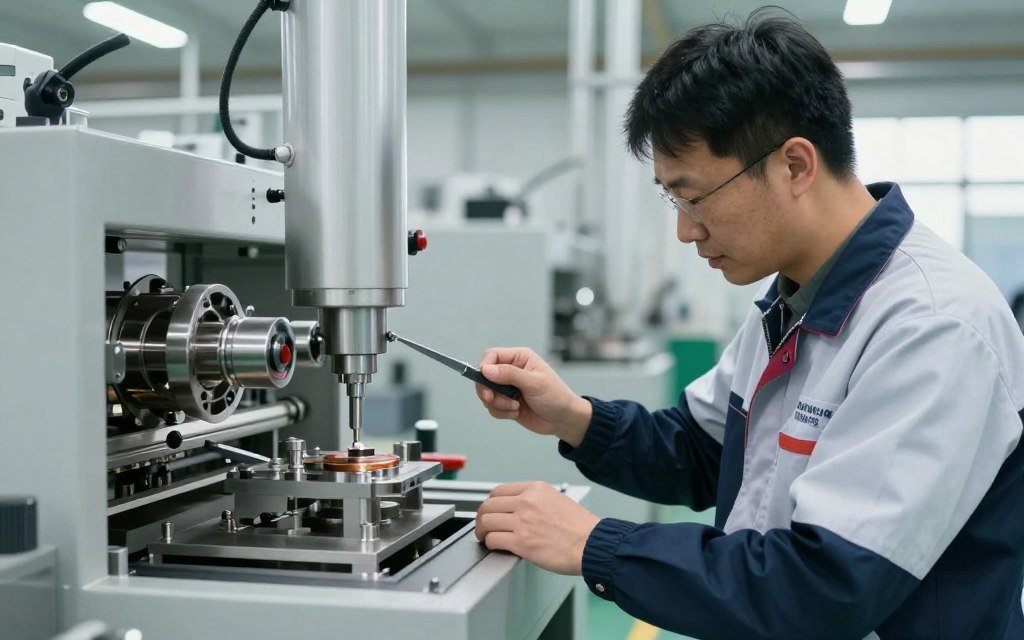
MAIKONG maintains rigorous quality standards throughout our manufacturing processes. Over 20 years of continuous improvement established systems ensuring every pellet machine meets exacting performance specifications.
Manufacturing Certifications
Our production facilities hold internationally recognized quality certifications:
- ISO 9001:2015 Quality Management: Comprehensive quality systems governing design, production, and customer service
- CE Certification: European safety and performance standards compliance for export markets
- Material Certifications: Steel and component materials traceable to mill certifications
- Welding Standards: AWS D1.1 structural welding procedures and welder qualifications
Component Quality Control
Critical components receive multiple inspection stages during manufacturing.
Dies and Rollers
- Alloy steel composition verification
- Heat treatment hardness testing
- Dimensional inspection to 0.05 mm tolerance
- Surface finish measurement
- Balance verification for rotating components
Drive Components
- Gearbox load testing at 150% rated capacity
- Bearing clearance verification
- Shaft alignment and runout measurement
- Belt tension and wear inspection
- Vibration analysis under load
Structural Elements
- Weld penetration radiographic testing
- Frame squareness and flatness verification
- Fastener torque confirmation
- Paint adhesion and thickness testing
- Corrosion protection validation
Final Testing Protocol
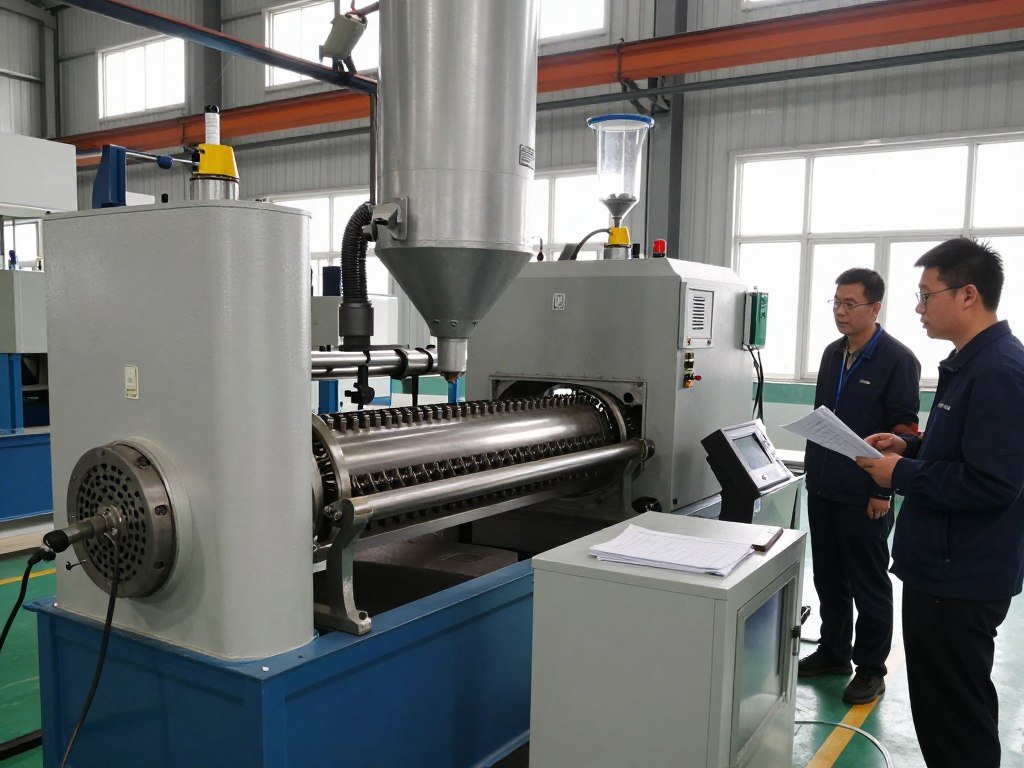
Every machine undergoes comprehensive testing before shipping to ensure arrival in perfect operational condition.
Standard Test Sequence
- Electrical testing: Insulation resistance, motor rotation verification, control function validation
- No-load running: 4-hour continuous operation monitoring temperatures, vibration, and noise levels
- Load testing: Production run with standard test material verifying capacity and power consumption
- Pellet quality evaluation: Dimensional consistency, durability index, moisture content verification
- Safety system validation: Emergency stops, overload protection, guard interlocks tested under operating conditions
- Documentation completion: Test certificates, inspection records, and operational parameters recorded
Customers receive complete test documentation with each machine delivery. Videos of factory acceptance testing available upon request demonstrating equipment performance before shipment.
Environmental and Sustainability Advantages

Lucerne pellet production using MAIKONG equipment delivers measurable environmental benefits beyond operational economics. Sustainability increasingly influences agricultural purchasing decisions across South Africa.
Carbon Footprint Reduction
Transportation represents the largest carbon emission component in traditional hay supply chains. Pelleted lucerne’s density advantage directly reduces fossil fuel consumption.
Traditional Hay Transportation
- Average load: 12 tons per truck
- Trips required for 100 tons: 8.3 trips
- Diesel consumption: 950 liters (@ 8.5 km/L, 1000 km roundtrip)
- CO₂ emissions: 2,527 kg
- Transport cost: R 28,500
Pelleted Feed Transportation
- Average load: 24 tons per truck
- Trips required for 100 tons: 4.2 trips
- Diesel consumption: 480 liters (@ 8.5 km/L, 1000 km roundtrip)
- CO₂ emissions: 1,276 kg
- Transport cost: R 14,400
Each 100 tons of lucerne transported as pellets instead of hay prevents 1,251 kg of carbon dioxide emissions while saving R 14,100 in transportation costs. For operations consuming 500 tons annually, emissions reduction reaches 6.3 tons CO₂ equivalent.
Waste Reduction Impact
Feed wastage creates both economic loss and environmental burden. Decomposing wasted hay generates methane emissions significantly more potent than CO₂ as greenhouse gases.
- Conventional hay feeding wastage: 18-25% average
- Pelleted feed wastage: 3-5% average
- Methane emission reduction: 78% decrease in decomposing organic waste
- Land use efficiency: Reduced lucerne acreage requirements for equivalent nutrition delivered
Water Conservation Benefits

South Africa faces ongoing water scarcity challenges. Efficient feed utilization indirectly conserves water resources required for lucerne production.
Lucerne cultivation requires 800 to 1,200 mm annual water application in most SA growing regions. A 20% reduction in wastage means 20% less lucerne production needed to deliver equivalent animal nutrition. This translates to substantial water savings:
- 100-hectare lucerne operation typical water use: 1,000,000 m³ annually
- Water saved through 20% improved feed efficiency: 200,000 m³
- Equivalent to supplying 400 households for one year
Circular Economy Applications
MAIKONG pellet machines process various agricultural residues beyond prime lucerne hay. This capability supports circular economy principles transforming waste streams into valuable .
- Lucerne processing waste: Stems and leaves rejected during hay production pelleted for lower-value feed markets
- Mixed crop residues: Lucerne combined with wheat or oat straw creating economical maintenance rations
- Garden and landscape waste: Urban municipalities pellet collected green waste for compost or biomass fuel
- Food processing byproducts: Brewery grains, fruit pomace, vegetable waste converted to animal feed
This versatility positions pellet machines as key equipment in integrated agricultural systems maximizing resource utilization while minimizing environmental impact.
Comparing Feed Pellet Machines: Selection Guide
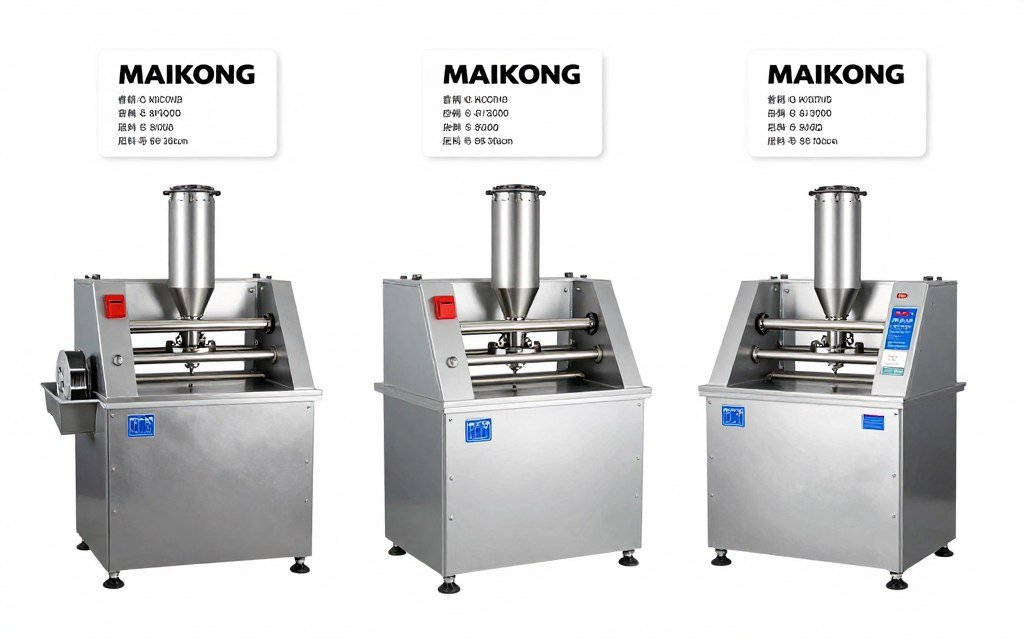
Selecting the appropriate pellet machine requires evaluating multiple factors beyond initial purchase price. This guide assists South African farmers and feed manufacturers matching equipment to specific requirements.
Capacity Planning
Proper capacity selection prevents both underutilization (wasting capital) and inadequate production (limiting operational growth).
Determining Required Hourly Capacity
Calculate your operation’s pellet consumption using this methodology:
- Identify daily consumption: Total livestock count × average pellet intake per animal
- Determine production days: Number of days monthly or annually operating the pellet machine
- Calculate daily production requirement: Monthly/annual consumption ÷ production days
- Establish hourly capacity: Daily requirement ÷ planned operating hours per day
- Add capacity buffer: Multiply by 1.25 to 1.35 accounting for maintenance downtime and efficiency variations
Example Capacity Calculation
Operation: 400 dairy cows consuming 8 kg pelleted lucerne daily each
Daily consumption: 400 cows × 8 kg = 3,200 kg (3.2 tons)
Production schedule: 3 days weekly (156 days annually)
Daily production target: (3,200 kg × 7 days) ÷ 3 production days = 7,467 kg per production day
Operating hours: 8 hours per production day
Base hourly requirement: 7,467 ÷ 8 = 933 kg/hour
Buffered capacity: 933 × 1.30 = 1,213 kg/hour recommended
Recommended machine: MKFD-560 model (1,200-1,500 kg/hour rated capacity)
Total Cost of Ownership Analysis
Purchase price represents only one component of equipment investment. Comprehensive cost analysis includes operational expenses over the machine’s expected lifespan.
| Cost Category | Small Unit (MKFD-200) | Medium Unit (MKFD-400) | Large Unit (MKFD-560) |
| Purchase Price | R 185,000 | R 465,000 | R 890,000 |
| Installation | R 12,000 | R 38,000 | R 95,000 |
| Annual Power Cost | R 18,500 | R 52,000 | R 125,000 |
| Annual Maintenance | R 8,500 | R 22,000 | R 48,000 |
| Die Replacement (per cycle) | R 8,200 | R 18,500 | R 35,000 |
| 5-Year Total Cost | R 345,700 | R 893,000 | R 1,815,000 |
| Cost Per Ton Produced | R 289 | R 198 | R 151 |
Larger capacity machines deliver lower per-ton production costs when operated near rated capacity. However, small operations running large equipment at partial loads waste capital and may not achieve projected cost advantages.
Feature Comparison Matrix
Beyond capacity and cost, various features influence pellet machine suitability for specific applications.
| Feature | Entry Level | Commercial | Industrial |
| Control System | Manual switches | Digital controls | Full PLC automation |
| Conditioning | Optional | Integrated steam | Multi-zone conditioning |
| Lubrication | Manual grease | Auto centralized | Programmable systems |
| Die Adjustment | Manual gap setting | Wrench adjustment | Hydraulic automatic |
| Remote Monitoring | Not available | Optional add-on | Standard included |
| Production Logging | Manual recording | Digital counters | Automated database |
| Typical Warranty | 12 months | 18-24 months | 24-36 months |
Application-Specific Recommendations

Match machine selection to your specific operational profile:
Small Mixed Farms
Operations under 100 livestock units, diverse animal species, part-time pellet production
Recommended: MKFD-200
- Flexibility for multiple feed types
- Manageable capital investment
- Simple operation and maintenance
Commercial Livestock
200-500 cattle, dedicated dairy or feedlot operations, consistent daily pellet requirements
Recommended: MKFD-400
- Reliable production capacity
- Automated features reduce labor
- Expandable with ancillary equipment
Feed Manufacturers
Commercial pellet production serving multiple farms, retail bagged feed sales, custom pelleting services
Recommended: MKFD-560
- High-volume continuous operation
- Quality consistency for brand reputation
- Integration with systems
Cooperatives
Multi-farm operations, shared equipment investment, service to diverse member needs
Recommended: MKFD-400 or MKFD-560
- Capacity serving multiple farms
- Automation reducing operator skill requirements
- Revenue generation through member fees
Frequently Asked Questions About Lucerne Feed Pellet Machines

What is the minimum moisture content for successful lucerne pelleting?
Lucerne requires 12 to 15 percent moisture for optimal pellet formation. Material below 10 percent produces excessive dust and brittle pellets. South African lucerne typically field-dries to 8 to 11 percent, requiring moisture addition before conditioning. MAIKONG machines include optional water injection systems precisely controlling moisture levels. Excessive moisture above 17 percent causes die blockages and soft pellets that crumble during handling and storage.
How long does a pellet machine die last when processing lucerne?
Die lifespan varies between 800 and 1,200 operating hours depending on lucerne preparation quality and die maintenance. Properly ground material (3-5 mm particles) with correct moisture content maximizes die life. Abrasive contaminants like soil significantly accelerate wear. MAIKONG dies feature hardened steel construction extending operational life 30 to 40 percent beyond standard dies. Regular inspection allows timely replacement before critical failure. We maintain stock of common die sizes in South Africa for rapid replacement minimizing production downtime.
Can a single machine produce pellets for different livestock species?
Yes. MAIKONG pellet machines process various feed formulations by changing dies and adjusting operational parameters. A farm raising cattle, sheep, and chickens can produce species-specific pellets on one machine. Different pellet diameters suit different animals – 8 mm for cattle, 6 mm for sheep, 3-4 mm for poultry. Die changes require 45 to 90 minutes. Many operations maintain multiple dies switching weekly or monthly based on production schedules. Thorough cleaning between different formulations prevents cross-contamination when producing medicated or specialized feeds.
What power supply is required for a medium-capacity pellet machine?
The MKFD-400 medium-capacity model requires a 37 kW three-phase electric motor. This translates to approximately 50 kVA transformer capacity accounting for motor starting loads and ancillary equipment. Standard South African industrial electrical service at 380V/50Hz is suitable. Rural installations may require transformer upgrades if existing service proves inadequate. Single-phase power does not provide sufficient capacity for medium and large machines. MAIKONG offers diesel-driven models for locations without reliable electrical infrastructure. Our technical team evaluates site electrical capacity during pre-installation planning, recommending necessary upgrades.
How does lucerne pellet quality compare to conventional hay nutritionally?
Properly produced lucerne pellets retain 90 to 95 percent of original hay nutritional value. The brief heat exposure during pelleting (85-95°C) does not significantly degrade protein or digestible fiber. Some carotene loss occurs (10-15 percent) but remains within acceptable ranges for most livestock feed applications. Pelleting actually improves feed utilization by eliminating selective feeding. Animals consuming pellets intake consistent nutrient ratios in every bite, unlike loose hay where they select preferred portions. Research at South African universities confirms pelleted lucerne delivers equivalent or superior livestock performance compared to quality hay when wastage reduction is factored into total nutrition delivered.
What is the typical return on investment period for a lucerne pellet machine?
ROI periods range from 14 months to 36 months depending on operation size, current feed costs, and production volume. Commercial livestock operations processing 3+ tons daily typically achieve payback within 18 to 24 months through combined savings from reduced wastage, lower transportation costs, and decreased purchased feed expenses. Smaller farms with lower daily consumption see 24 to 36 month payback periods. Custom pelleting operations serving multiple clients often recover investment within 12 to 18 months through service fees. MAIKONG provides detailed ROI calculations specific to your operation accounting for local lucerne prices, electricity rates, and volumes. Contact our team at Lucy@pelletmachine.co.za for customized financial analysis.
Can pellet machines process lucerne mixed with other ingredients?
Absolutely. MAIKONG equipment processes complete feed rations combining lucerne with grains, protein supplements, minerals, and vitamins. Mixed rations require batch mixers ensuring uniform ingredient distribution before pelleting. Common South African formulations combine lucerne with maize meal, sunflower oilcake, molasses, and mineral premixes creating complete nutritional packages. The pelleting process binds ingredients preventing separation during handling and feeding. This capability proves particularly valuable for dairy and feedlot operations formulating precise rations for different production stages. Our technical team assists with formulation development and mixer sizing appropriate for your requirements.
What maintenance skills are required to operate a pellet machine?
Basic mechanical aptitude suffices for routine maintenance. Tasks include daily lubrication (automatic systems), belt tension checks, and visual inspections. Die replacement requires moderate mechanical skills – typical farm staff complete this procedure after training. MAIKONG provides comprehensive instruction manuals with illustrated procedures. Our installation includes hands-on training for designated operators and maintenance personnel. More complex repairs like bearing replacement or gearbox service typically require technician-level skills. Many operations establish service contracts with local MAIKONG dealers for scheduled maintenance and repairs. Emergency technical support remains available via WhatsApp at +86-158-15556-422 where our engineers guide customers through troubleshooting procedures.
How does seasonal lucerne quality variation affect pellet production?
Seasonal variations in lucerne maturity and moisture content require minor operational adjustments but don’t prevent successful pelleting. Spring growth typically contains higher moisture and protein levels, requiring less moisture addition during conditioning. Mature summer lucerne often needs increased moisture and slightly longer conditioning time. MAIKONG machines with variable-speed feeders and adjustable conditioning systems accommodate these seasonal differences. Experienced operators learn to recognize material characteristics and make appropriate parameter adjustments. Our technical support team assists customers optimizing settings for different lucerne batches. Properly stored lucerne maintains consistent characteristics reducing seasonal variation impact on efficiency.
Are MAIKONG pellet machines suitable for organic lucerne feed certification?
Yes. MAIKONG equipment meets organic certification requirements when used with approved ingredients and cleaning procedures. The machines feature stainless steel contact surfaces in food-grade versions. No lubricants or additives contact the feed material during normal operation. Organic producers must implement thorough cleaning protocols between conventional and organic production runs. Our machines design facilitates complete disassembly for cleaning and inspection. South African organic certifiers including IFOAM and SAOSO accept equipment meeting basic sanitation standards. MAIKONG provides documentation supporting certification applications. Several existing customers maintain organic certification for lucerne pellet production using our equipment.
MAIKONG Technical Support and Customer Service
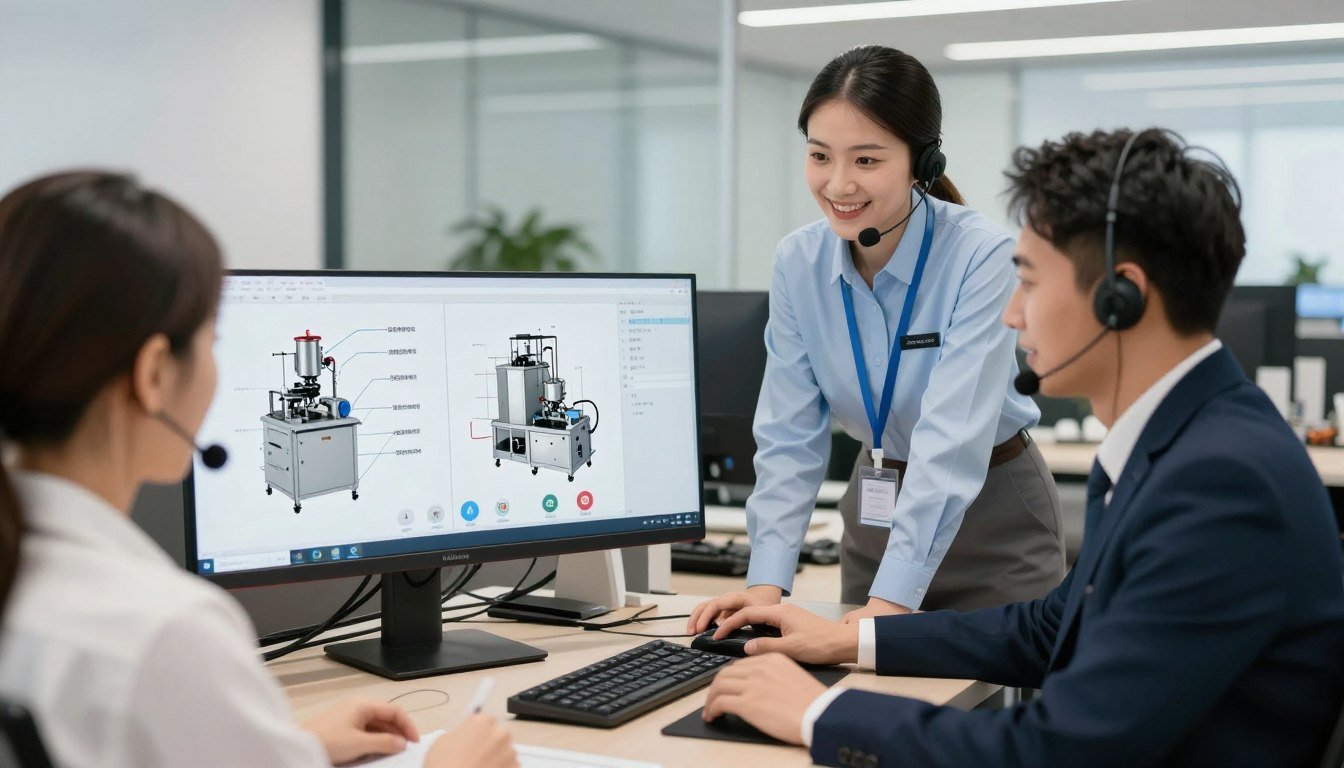
MAIKONG’s commitment to customer success extends beyond equipment delivery. Our comprehensive support ensures South African agricultural operations maximize their pellet machine investments.
Multi-Channel Support Access
We maintain multiple communication channels accommodating customer preferences and urgency levels.
WhatsApp Technical Support
Immediate response for operational questions and troubleshooting. Our technical team monitors WhatsApp during South African business hours providing real-time guidance.
- Photo and video sharing for problem diagnosis
- Quick parts identification and ordering
- Operating parameter recommendations
- Scheduled maintenance reminders
Email Correspondence
Detailed technical inquiries, quotation requests, parts orders, and dealer applications processed via email with 24-hour response commitment.
Email: Lucy@pelletmachine.co.za
- Custom quotation development
- Engineering drawings and specifications
- Dealer application processing
- Warranty claim submission
Parts and Consumables Supply
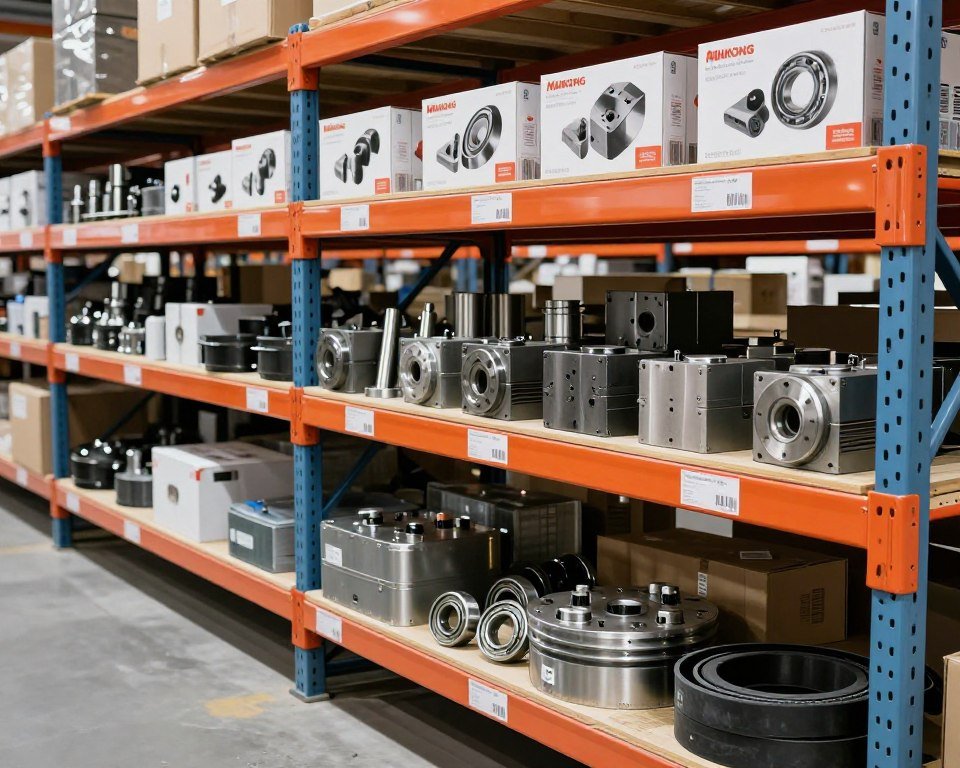
MAIKONG maintains parts inventory in South Africa ensuring rapid replacement minimizing production downtime. Common wear components ship same-day for orders received before 14:00.
Stocked Replacement Parts
- Dies and rollers: All standard sizes for MAIKONG models
- Bearings: Main shaft and roller bearings
- Belts and couplings: Drive system components
- Electrical components: Contactors, relays, sensors
- Lubrication items: Grease, gearbox oil, lubricators
- Safety components: Emergency stops, guards, interlocks
Parts pricing remains competitive with aftermarket suppliers while guaranteeing genuine MAIKONG quality. Volume discounts available for dealers and large operations maintaining their own parts inventory.
Warranty Coverage
MAIKONG equipment includes comprehensive warranty protection covering manufacturing defects and premature component failure.
| Component Category | Warranty Period | Coverage Details |
| Structural Frame | 36 months | Welded joints, mounting points, material defects |
| Drive Systems | 24 months | Motors, gearboxes, shafts, couplings |
| Dies and Rollers | 800 hours | Manufacturing defects only, not normal wear |
| Electrical Components | 18 months | Controls, sensors, wiring, safety systems |
| Bearings and Seals | 12 months | Premature failure with proper maintenance |
Warranty claims require documentation of proper maintenance and operation according to provided manuals. MAIKONG technical staff assists customers with warranty submission procedures ensuring smooth claim processing.
Transform Your Lucerne into Profitable Feed Pellets
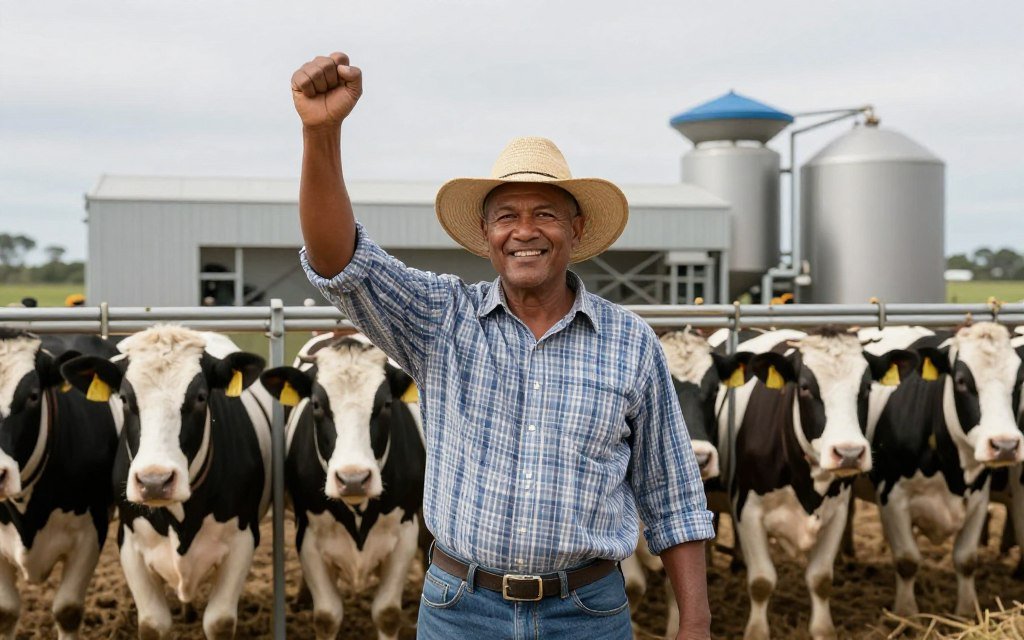
South Africa’s lucerne represents green gold for livestock nutrition. Converting this valuable resource into dense, consistent feed pellets maximizes its economic and nutritional value. MAIKONG brings over 20 years of manufacturing expertise to the South African agricultural market, delivering reliable equipment backed by comprehensive technical support.
Our feed pellet machines serve operations ranging from emerging farmers with 50 livestock to industrial feed manufacturers processing hundreds of tons daily. Each system incorporates proven engineering designed specifically for lucerne’s unique processing characteristics.
Why Choose MAIKONG for Your Lucerne Pelleting Equipment?
Manufacturing Excellence
- 20+ years continuous improvement in pellet machine design
- ISO 9001:2015 certified quality management
- Factory testing every machine before shipment
- Premium components from verified suppliers
- Comprehensive documentation and test certificates
South African Market Understanding
- Equipment configured for SA electrical standards
- Local parts inventory and rapid delivery
- Understanding of regional lucerne varieties
- Pricing in South African Rand
- Support during SA business hours
Complete Customer Support
- WhatsApp technical assistance
- Installation and commissioning services
- Operator training programs
- Maintenance and repair support
- Warranty protection on all equipment
Customization Capabilities
- Electrical configurations for diverse power conditions
- Appearance and branding customization
- Automation levels matching operational requirements
- Complete production line design and integration
- OEM partnership opportunities
Take the Next Step Toward Lucerne Pelleting Success
Whether you’re an emerging farmer exploring feed cost reduction opportunities, a commercial livestock operation planning production expansion, or an agricultural equipment dealer seeking quality products, MAIKONG provides solutions matching your specific requirements.
Our team welcomes inquiries from all South African agricultural sectors. We provide customized quotations, ROI analysis, technical specifications, and detailed proposals without obligation. Dealer and distribution partnership applications receive priority consideration with comprehensive support programs.
Ready to Transform Your Lucerne into Profitable Feed Pellets?
MAIKONG has supplied lucerne pelleting solutions across South Africa for over 20 years. Contact us today for expert guidance, custom quotations, and ongoing technical support. Join hundreds of successful operations already benefiting from MAIKONG feed pellet machines.
Website: pelletmachine.co.za
Learn More: About MAIKONG | Feed Pellet Machines
MAIKONG – Engineering Agricultural Success Since 2003. Your trusted partner for pellet machines, feed processing equipment, and complete production lines serving South Africa’s agricultural future.
